“Well the first thing you know
Mobil had some bucks to spare,
Kinfolk said "That drillin’s such a bear!"
Said "Stores and catalogs are where you oughta be"
So they loaded up the stock
And they bought Montgomeryyy…
Ward, that is…..”
(With apologies to Lester Flatt and Earl Scruggs. And anyone still reading this post.)
To be sure, the biggest story of the 1970’s for Montgomery Ward was their acquisition by Mobil Corporation. After 96 years as an independent company followed by six more as the “senior partner” in the holding company Marcor, Wards was about to become a division of a company many times its size.
As mentioned, Mobil Corporation, known at one time as Standard Oil Company of New York, was in 1974 the country’s third largest oil firm and seventh largest company overall. In 1973, Mobil acquired 4.5% of Marcor’s (corporate parent of Wards and Container Corporation of America, a packaging company) stock on the open market, more-or-less flying under the radar of the press and government regulators alike. In June 1974, Mobil went public with its desire to acquire control of Marcor, with the stated goal of diversifying its business.
It could easily be said Mobil’s timing wasn’t the greatest - trying to invest profits outside of oil exploration when the oil crisis of 1973-4 was still vying with Watergate in the headlines. In fact, the shortage had technically been “over” for only a couple of months at that point, and the resultant higher gas prices were here to stay. Reading then-current newspaper and magazine articles about Mobil’s offer to buy Marcor, though, you get the feeling their execs knew exactly what they were about to get into.
Expected as it was, the political backlash was indeed strong – Wisconsin congressman Les Aspin, according to the Chicago Tribune, warned that a merger “would result in a restraint of trade” since Montgomery Ward also sold tires, batteries, auto accessories and gasoline (in some cases) at its auto centers. Senator Thomas McIntyre of New Hampshire was “absolutely outraged” that Mobil would “spend three-fifths of its last year profits to buy a non-energy enterprise.” Minnesota Senator (and soon-to-be vice president) Walter Mondale was quoted as saying the transaction “clearly indicate(d) the big oil companies don’t know what to do with their excess profits.” As late as April 1979, according to Business Week, President Carter weighed in on the Mobil/Marcor merger (which had actually occurred months before Carter was even elected to the presidency), citing it as a textbook example of the need for a windfall profits tax on the major oil companies.
Despite this, Mobil pressed forward with a tender offer for 51 percent of Marcor, with the blessing of Marcor’s upper management, conditioned on the fact that Mobil would allow Marcor’s existing management to run the day-to-day operations. In August 1974, the merger was consummated, although the U.S. Justice Department would continue to review it. Wards now had a “rich uncle Mobil”, according to the Chicago Tribune. In March 1976 Mobil (which already owned 54 percent of Marcor at that point) moved to acquire the rest of the company, and three months later the deal was finally done.
For the first couple of years following the Mobil merger, Montgomery Ward, still riding a wave of success that started in the early 70’s, contributed respectably to their new parent company’s profits. By 1979, however, things had taken a sharp turn for the worse, aided in no small part by the dismal economic conditions (with a second oil crisis topping the bill) that characterized that year. Another problem had its seeds in Wards’ initial turnaround strategy of the early 1960’s, and only became apparent over time – the company’s continual desire to emulate Sears. Indeed, nearly all of Wards’ key management had come from Sears, their desire to one-up the ol’ alma mater fueled by a strange mix of admiration and revenge. For many of those years it was a valid strategy, while Sears cruised along from strength to strength through the 60’s into the early years of the following decade - definitely a style to follow. Problem was, by 1979, Sears was having huge identity problems of its own, and both Sears and Wards were facing intensified competition from specialty stores, home centers and the Relentless Advance of the K-Monster.
Alarmed by these developments and eager to protect their investment, Mobil stepped in “with a new financial package and encouragement to proceed with a markedly different marketing strategy”, according to a July 17, 1980 Business Week article. The financial package was an interest-free $200 million “loan”, and the marketing strategy involved a small company that Wards had purchased back in 1973 – Miami-based Jefferson Stores, Inc., a discount store chain with seven stores at the time Wards bought them out. “React(ing) as if Jefferson were the retail equivalent of an oil strike”, as Business Week later put it, the mandate from Mobil was clear – “high quality discount units”, along the lines of Dayton-Hudson Company’s Target stores, would be Montgomery Ward’s future.
Whatever their behind-the-scenes reservations may have been, the Wards executives were on board, at least publicly. “The mass merchandiser has been doing poorly in comparison with the discounter, so we’re making a major change in our strategy” said Gordon Worley, Wards’ executive VP, and CEO Ed Donnell went so far as to praise checkout lanes, long a staple of discounters and anathema to department stores – “There is no question that the public likes a checkout store, assuming the store does a good job of categorizing merchandise and providing help where it’s needed”. Within 18 months, Mobil had quintupled the size of the operation, now called Jefferson Ward, to over 40 units, an “unprecedented expansion in retailing” as Business Week put it. Plans were in place to convert one-third of Montgomery Ward’s existing stores to the Jefferson Ward model.
The result, unfortunately, was chaos. The burden of servicing the new stores fell to the tiny Jefferson staff. Overwhelmed by the hugely increased store count, mistakes were rampant. Stores received “too many or too few goods”, according to Business Week, and the Jefferson people had no experience in dealing with the furniture, high-end apparel and other unfamiliar Ward staples they were now “forced” to carry. On top of that, the chain’s expanded geographic footprint (into brutally competitive markets such as Philadelphia and portions of New Jersey) posed new problems for the Jefferson buyers, who were used to stocking for balmy South Florida climes. Winter coats, for example, arrived on the racks of Jefferson Ward’s new Northern stores a month after the winter selling season began – and that’s exactly where most of them stayed. The net result was that Jefferson had turned from “a small moneymaker” to a fairly good-sized loss operation. The strategy that was supposed to save Wards’ bacon was burning it.
Flummoxed, Mobil turned to someone outside the insular Sears/Wards universe to set the ship right. In March 1981, the company appointed Stephen L. Pistner as president of Montgomery Ward. Pistner, who held the same position at Dayton-Hudson Corp. at the time he was recruited to run Wards, had a heavy claim to fame in the retail world. In 1973, Pistner became head of that company’s Target discount store division, an operation with great potential but sorely lacking in direction. Pistner was instrumental in fostering the culture and sense of style (right down to advocating the stores’ pervasive red color scheme, against all conventional wisdom of the day) that laid the foundation for Target’s current success. Reputed for straight talk, Pistner “was attracted to strong personalities (in managers)” and allowed them considerable latitude “as long they delivered”, he told author Laura Rowley, author of the book On Target.
Upon arriving at Wards, Pistner soon learned that the company’s turnaround strategy “was poorly researched, ill-defined and miserably executed” as Business Week phrased it, and he immediately killed the plans to convert 115 standard Montgomery Ward stores to the Jefferson Ward format. Instead, the new Wards image would be that of a “hybrid merchandiser”, with “the operating disciplines of discounting and the presentation concepts of specialty merchants”, precisely the two types of competitors that were giving the company fits at the time.
There would be changes in the merchandise mix as well, with a greater emphasis on “lower-margin, high turnover items” such as health and beauty aids, and a move away from big-ticket items. Pistner instituted a “never-out” policy for 1000 core items, presumably a legacy of his Target days. He also commissioned a study of Wards’ customer base that yielded some interesting results –an unexpectedly loyal following of 25-to-40 year old shoppers, for one. “We are loaded with young customers but are not supplying them with what they want”, a “Ward insider” told Business Week. To address the issue, Wards set plans to beef up their offerings of such items as children’s clothes and young adult sportswear, including a Summer 1981 promotion of Izod alligator-logo shirts for a jaw-dropping 19 bucks apiece. (Sure wish I’d heard about that 29 ½ years ago. I could never afford ‘em at regular price, and settled for the JCPenney “Fox” knockoffs instead, in clear violation of the tenets set forth in The Preppy Handbook. Honks me off just thinking about it.)
In late 1982, the company’s 15-year-old “blue bar” logo was retired in favor of a new image. Whereas the old logo featured a smaller-type “Montgomery” stacked over a much larger-type “Ward”, the new logo featured the name “Montgomery Ward” horizontally, typeset in gray Serifa Bold over a burgundy underscore, although there would be several color variants of both in the ensuing years. The goal was to return the emphasis to the company’s full name, according to Chicago Tribune business columnist George Lazarus, who quoted the company’s design director: “Wards is not a unique name in the marketplace. Montgomery is what gives our name distinction”. (My thoughts exactly.)
Two years into Stephen Pistner’s reign, in early 1983, Wards was still losing money and borrowing heavily from its parent company, Mobil. The costly shift in merchandising approach and a host of painful cutbacks (including nearly one-fifth of the company’s employees) were not yet yielding dividends, and rumors swirled that Mobil had lost patience and would soon dump Montgomery Ward. Still, Pistner was adamant in comments to the Chicago Tribune in a March ‘83 article - 1984 would see the company would finally go into the black.
As mentioned, Mobil Corporation, known at one time as Standard Oil Company of New York, was in 1974 the country’s third largest oil firm and seventh largest company overall. In 1973, Mobil acquired 4.5% of Marcor’s (corporate parent of Wards and Container Corporation of America, a packaging company) stock on the open market, more-or-less flying under the radar of the press and government regulators alike. In June 1974, Mobil went public with its desire to acquire control of Marcor, with the stated goal of diversifying its business.
It could easily be said Mobil’s timing wasn’t the greatest - trying to invest profits outside of oil exploration when the oil crisis of 1973-4 was still vying with Watergate in the headlines. In fact, the shortage had technically been “over” for only a couple of months at that point, and the resultant higher gas prices were here to stay. Reading then-current newspaper and magazine articles about Mobil’s offer to buy Marcor, though, you get the feeling their execs knew exactly what they were about to get into.
Expected as it was, the political backlash was indeed strong – Wisconsin congressman Les Aspin, according to the Chicago Tribune, warned that a merger “would result in a restraint of trade” since Montgomery Ward also sold tires, batteries, auto accessories and gasoline (in some cases) at its auto centers. Senator Thomas McIntyre of New Hampshire was “absolutely outraged” that Mobil would “spend three-fifths of its last year profits to buy a non-energy enterprise.” Minnesota Senator (and soon-to-be vice president) Walter Mondale was quoted as saying the transaction “clearly indicate(d) the big oil companies don’t know what to do with their excess profits.” As late as April 1979, according to Business Week, President Carter weighed in on the Mobil/Marcor merger (which had actually occurred months before Carter was even elected to the presidency), citing it as a textbook example of the need for a windfall profits tax on the major oil companies.
Despite this, Mobil pressed forward with a tender offer for 51 percent of Marcor, with the blessing of Marcor’s upper management, conditioned on the fact that Mobil would allow Marcor’s existing management to run the day-to-day operations. In August 1974, the merger was consummated, although the U.S. Justice Department would continue to review it. Wards now had a “rich uncle Mobil”, according to the Chicago Tribune. In March 1976 Mobil (which already owned 54 percent of Marcor at that point) moved to acquire the rest of the company, and three months later the deal was finally done.
For the first couple of years following the Mobil merger, Montgomery Ward, still riding a wave of success that started in the early 70’s, contributed respectably to their new parent company’s profits. By 1979, however, things had taken a sharp turn for the worse, aided in no small part by the dismal economic conditions (with a second oil crisis topping the bill) that characterized that year. Another problem had its seeds in Wards’ initial turnaround strategy of the early 1960’s, and only became apparent over time – the company’s continual desire to emulate Sears. Indeed, nearly all of Wards’ key management had come from Sears, their desire to one-up the ol’ alma mater fueled by a strange mix of admiration and revenge. For many of those years it was a valid strategy, while Sears cruised along from strength to strength through the 60’s into the early years of the following decade - definitely a style to follow. Problem was, by 1979, Sears was having huge identity problems of its own, and both Sears and Wards were facing intensified competition from specialty stores, home centers and the Relentless Advance of the K-Monster.
Alarmed by these developments and eager to protect their investment, Mobil stepped in “with a new financial package and encouragement to proceed with a markedly different marketing strategy”, according to a July 17, 1980 Business Week article. The financial package was an interest-free $200 million “loan”, and the marketing strategy involved a small company that Wards had purchased back in 1973 – Miami-based Jefferson Stores, Inc., a discount store chain with seven stores at the time Wards bought them out. “React(ing) as if Jefferson were the retail equivalent of an oil strike”, as Business Week later put it, the mandate from Mobil was clear – “high quality discount units”, along the lines of Dayton-Hudson Company’s Target stores, would be Montgomery Ward’s future.
Whatever their behind-the-scenes reservations may have been, the Wards executives were on board, at least publicly. “The mass merchandiser has been doing poorly in comparison with the discounter, so we’re making a major change in our strategy” said Gordon Worley, Wards’ executive VP, and CEO Ed Donnell went so far as to praise checkout lanes, long a staple of discounters and anathema to department stores – “There is no question that the public likes a checkout store, assuming the store does a good job of categorizing merchandise and providing help where it’s needed”. Within 18 months, Mobil had quintupled the size of the operation, now called Jefferson Ward, to over 40 units, an “unprecedented expansion in retailing” as Business Week put it. Plans were in place to convert one-third of Montgomery Ward’s existing stores to the Jefferson Ward model.
The result, unfortunately, was chaos. The burden of servicing the new stores fell to the tiny Jefferson staff. Overwhelmed by the hugely increased store count, mistakes were rampant. Stores received “too many or too few goods”, according to Business Week, and the Jefferson people had no experience in dealing with the furniture, high-end apparel and other unfamiliar Ward staples they were now “forced” to carry. On top of that, the chain’s expanded geographic footprint (into brutally competitive markets such as Philadelphia and portions of New Jersey) posed new problems for the Jefferson buyers, who were used to stocking for balmy South Florida climes. Winter coats, for example, arrived on the racks of Jefferson Ward’s new Northern stores a month after the winter selling season began – and that’s exactly where most of them stayed. The net result was that Jefferson had turned from “a small moneymaker” to a fairly good-sized loss operation. The strategy that was supposed to save Wards’ bacon was burning it.
Flummoxed, Mobil turned to someone outside the insular Sears/Wards universe to set the ship right. In March 1981, the company appointed Stephen L. Pistner as president of Montgomery Ward. Pistner, who held the same position at Dayton-Hudson Corp. at the time he was recruited to run Wards, had a heavy claim to fame in the retail world. In 1973, Pistner became head of that company’s Target discount store division, an operation with great potential but sorely lacking in direction. Pistner was instrumental in fostering the culture and sense of style (right down to advocating the stores’ pervasive red color scheme, against all conventional wisdom of the day) that laid the foundation for Target’s current success. Reputed for straight talk, Pistner “was attracted to strong personalities (in managers)” and allowed them considerable latitude “as long they delivered”, he told author Laura Rowley, author of the book On Target.
Upon arriving at Wards, Pistner soon learned that the company’s turnaround strategy “was poorly researched, ill-defined and miserably executed” as Business Week phrased it, and he immediately killed the plans to convert 115 standard Montgomery Ward stores to the Jefferson Ward format. Instead, the new Wards image would be that of a “hybrid merchandiser”, with “the operating disciplines of discounting and the presentation concepts of specialty merchants”, precisely the two types of competitors that were giving the company fits at the time.
There would be changes in the merchandise mix as well, with a greater emphasis on “lower-margin, high turnover items” such as health and beauty aids, and a move away from big-ticket items. Pistner instituted a “never-out” policy for 1000 core items, presumably a legacy of his Target days. He also commissioned a study of Wards’ customer base that yielded some interesting results –an unexpectedly loyal following of 25-to-40 year old shoppers, for one. “We are loaded with young customers but are not supplying them with what they want”, a “Ward insider” told Business Week. To address the issue, Wards set plans to beef up their offerings of such items as children’s clothes and young adult sportswear, including a Summer 1981 promotion of Izod alligator-logo shirts for a jaw-dropping 19 bucks apiece. (Sure wish I’d heard about that 29 ½ years ago. I could never afford ‘em at regular price, and settled for the JCPenney “Fox” knockoffs instead, in clear violation of the tenets set forth in The Preppy Handbook. Honks me off just thinking about it.)
In late 1982, the company’s 15-year-old “blue bar” logo was retired in favor of a new image. Whereas the old logo featured a smaller-type “Montgomery” stacked over a much larger-type “Ward”, the new logo featured the name “Montgomery Ward” horizontally, typeset in gray Serifa Bold over a burgundy underscore, although there would be several color variants of both in the ensuing years. The goal was to return the emphasis to the company’s full name, according to Chicago Tribune business columnist George Lazarus, who quoted the company’s design director: “Wards is not a unique name in the marketplace. Montgomery is what gives our name distinction”. (My thoughts exactly.)
Two years into Stephen Pistner’s reign, in early 1983, Wards was still losing money and borrowing heavily from its parent company, Mobil. The costly shift in merchandising approach and a host of painful cutbacks (including nearly one-fifth of the company’s employees) were not yet yielding dividends, and rumors swirled that Mobil had lost patience and would soon dump Montgomery Ward. Still, Pistner was adamant in comments to the Chicago Tribune in a March ‘83 article - 1984 would see the company would finally go into the black.
Throughout 1983, nearly 60 existing Montgomery Ward stores received the “Impact II” renovations and a number of new ones, including a 153,000 square foot store at Chicago’s Ford City Mall on Chicago’s southwest side, were opened. As Tribune writer Janet Key noted, however, Wards was far from alone in debuting a “new look” at the time, with Sears eagerly rolling out its “Store of the Future” concept and JCPenney scrapping auto centers and hard goods in favor of fashion.
It must’ve helped though, as Pistner’s profitability prediction (the “Triple-P”, as it were) did come true, with the company posting its first annual profit in 5 years and best Christmas season in longer than that, a January 26, 1984 Tribune article attested. He attributed the chain’s greatly improved performance to the new store designs, which emphasized the “Seven Worlds of Wards” - apparel, automotive, home electronics, home furnishings, appliances, home improvements, and recreation and leisure. The remodeling program would extend through the new year, affecting 65 more stores, and Pistner noted that the focus would now turn towards the company’s 48-store Jefferson Ward chain. “There’s nothing wrong with the basic strategy of upscale discounting, but (Jefferson Ward) is a little out of whack”, he told the Tribune. “It needs to be corrected the way Wards was corrected”.
But by the end of the year, he was gone. On the last day of 1984, it was announced that Pistner had resigned to accept the CEO position at McCrory Stores, the dime store division of Rapid-American Corporation. Speculation as to why he left, of course, was rampant – the possible reasons including frustration at dealing with oil executives as opposed to retail people, or perhaps a sense that his task of returning Ward to profitability was complete and it was time to move on. For his part, Pistner simply said he had received “an exceptional offer”. At McCrory, Pistner would oversee the purchase of the Kresge and Jupiter chains from Kmart Corporation. In 1987, after a falling out with Rapid-American chairman Meshulam Riklis, Pistner resigned. In 1990, he became chairman and CEO of bankrupt Ames, enduring two undoubtedly miserable years there.
To replace Pistner as head of Montgomery Ward, Mobil hired Bernard Brennan, president of Household Merchandising Inc., the parent company of Ben Franklin and T.G. and Y. variety stores and Vons, the Los Angeles-based supermarket chain. This was Brennan’s second tour of duty at Wards, having served previously as a vice president under Pistner. Much of his career, however, was spent at Sears, Roebuck and Co., where his father, grandfather and notably, brother – had worked. I say notable because his brother, Edward Brennan, had recently been appointed CEO of Sears. The Brennan brothers, both heading up legendary yet troubled retailers, were the subject of a great many business stories during the 1980’s as one might expect.
In 1985, with a degree of stability achieved, Mobil began to seriously consider selling off Montgomery Ward. For over two years, Ward had not required additional cash from Mobil, the new merchandising strategy was largely in place, and some of the painful cuts had already been made, including a tiny subsidiary that few knew about – unless you were a kid growing up in the Chicago area, that is. In 1973 Wards had purchased the Golden Bear Restaurant chain, a group of 21 pancake houses throughout the Chicago area, with headquarters in northwest suburban Mount Prospect. I remember these with great fondness, and one thing still stands out after all these years - the napkins, with pictures of “Golden Bear”, stacks of pancakes, and a little song printed on them: “Golden Bear, Golden Bear, it’s a honey of a place where food is fun”, complete with a staff and musical notes. Although I couldn’t read music at that age (not that I’m great at it now), I always had a tune in my head that fit the words. In mid-1984, Wards sold the chain to PepsiCo, who converted many of the locations to Pizza Huts and dumped the rest. Guess I should have saved one of those napkins.
More painful cuts were to come, though. One of those was the discontinuance of the company’s legendary 103-year-old catalog, for decades the very foundation of the business. As Ward president Bernard Brennan was quoted in the New York Times, “Frankly, we see no promise of improvement in our catalogue segment” (“Catalogue” – heh. But this is the Times, you know.) The last Wards catalog was set for December 1985 release. Of course there was the sticky issue of what to do with Wards’ 1,250 small catalog stores, franchised for the most part to mom-and-pop operators. A number of these opted to join a new cooperative formed by former Ward executives called Amity Associated Stores. (I wasn’t able to find much information on these, and can only assume they weren’t around long.) The company’s Jefferson Ward unit, which had gone from panacea to pariah in a relatively short span of time, was also put on the block. In June of 1985, Jefferson’s 18-store Northern Division was sold to Stop & Shop Companies, Inc., for conversion to Bradlees stores.
With most of the subsidiaries and peripheral businesses gone by the end of 1985, Montgomery Ward, then consisting of 300-plus full-line or nearly full-line stores, embarked on a “specialty store” approach, sort of an intensified version of the “Seven Worlds of Wards” with fewer worlds (hardware, plumbing, lawn and garden and toys were now history, according to a New York Times article). They emphasized branding this time - “The Store for Kids” was one, complete with a six-foot tall dinosaur (a little unintended symbolism there?) at the department entrance. “The Appliance Center”, “Home Ideas” and “Auto Express” were others, but the best remembered one today would have to be “Electric Ave.”, Wards’ new moniker for its home electronics department. Not sure what it did for Wards, but no doubt it extended Eddy Grant’s fame by a few years. There were also some unusual joint real-estate ventures – when the company renovated its Gaithersburg, Maryland store, for example, it leased 30 percent of the store’s space to Toys R Us.
Throughout this period, Montgomery Ward’s financial condition continued to improve, firmly convincing Mobil that the time was right to sell. The leading contender, according to Times business columnist Isadore Barmash in a January 1988 article, was Wards’ own management, led by chairman Bernard Brennan. As it turned out, Brennan, who was credited with the company’s sustained prosperity, was a friend of Jack Welch, the legendary chairman of General Electric Company. Welch spearheaded GE’s purchase of RCA (and its television network subsidiary NBC) and moved the company into financial services in a huge way through their GE Capital division, among many other accomplishments. As long as Brennan remained at Montgomery Ward’s helm, the prospects of a GE-financed management buyout were golden. On March 7, 1988, the sale was completed for $3.8 billion.
Through the 1990’s, unfortunately, the company steadily lost focus (and money), and by the end of the decade it was clear to all that the wheels were off the thing. One bad decision followed another – a re-entry into the catalog business through a joint venture with Fingerhut, 1991. A buyout of troubled electronics chain Lechmere, 1994. A 19.6% stake in doomed furniture chain Levitz, 1995. Buying Amoco Motor Club, 1996. The cherry on top came in a May 21, 1996 New York Times article – “Montgomery Ward May Consider Selling Its Retail Stores”. The Montgomery Ward stores, that is. No one was interested in the chain itself, which was understandable considering its dismal performance, although the article mentioned a likely willingness by Sears to snap up Wards’ better store locations.
In July 1997, under the weight of heavy losses and looming debt, and despite cash infusions from GE Capital along the way, Montgomery Ward declared bankruptcy. In November of that year, 47 stores were closed, with more to follow, sadly. In 1999, another new logo was rolled out, but by that time a majority of the buying public had written Wards off, and with the chain’s reduced store base of 250 units, it was an option for fewer and fewer shoppers anyway.
On December 28, 2000, after 128 years in business, Montgomery Ward closed its doors for the last time. The eulogies poured in, highlighting the key moments in Wards history- an integral part of America’s own. There was even a spot on the New York Times editorial page, a rare honor for a retailer.
It has often been said that Wards never really recovered from its voluntary period of stagnation in the 1940’s and 50’s. That the chain fell behind its competitors and permanently lost its standing with the American buying public, despite efforts great and small over the following decades. I tend to agree with this view, to a point. But I also know, from my own personal experience and that of others as expressed on this website and in conversations, that many of us have cherished memories of shopping at Montgomery Ward. For us, in that time and place, it mattered.
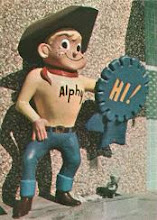
The photos above are various publicity shots from Wards’ Mobil-ownership period, mostly from 1974, locations unknown. (Thanks to readers Scott and Kenney for identifying the Wards store pictured in the third photo as the South Park Mall location in Shreveport, Lousiana. The mall has since closed and now houses the Summer Grove Baptist Church. The mall's JCPenney store is now the main sanctuary and the Wards store is a cinema venue for Christian themed-movies. Thanks again to you both for this update!) The last photo depicts the Richardson Square Mall (Dallas area) location, which opened in July 1977. Below, a typical Jefferson Ward store from 1980 and a “new look” Wards (ahem, Montgomery Ward) interior entrance circa 1985.

 Thanks for everyone’s patience through this long stretch between posts. Yes, I’ve been busy, but your loyal readership means a lot to me, and I hate letting you down. After all, to paraphrase the Wards guy, it’s not the Pleasant(ness) or even the Shopping that gives us distinction, it’s the Family!