Showing posts with label Pennsylvania. Show all posts

Thursday, April 11, 2013

Remembering Korvette's Eugene Ferkauf


Last year saw the passing of one of the most influential figures in retailing history, one who deserves more recognition than he receives today, I’m afraid. Eugene Ferkauf, founder of the legendary E.J. Korvette chain of promotional department stores, passed away on June 5, 2012 in New York City at the age of 91.

In the early sixties, Ferkauf found himself the subject of a fair amount of media attention as his company ascended. By all appearances, E. J. Korvette looked to be on the verge of breaking out into a national chain. As the decade rolled on, however, things changed drastically – the company ran into trouble, the dreams were scaled back, and with Ferkauf’s departure in 1968, “Korvettes” (as it was then officially known) began to wane rapidly. His influence continued, but more on the discount industry as a whole rather than on the company he founded.

The origins of E.J. Korvette, which have been discussed to some extent here before, fall squarely within the realm of the bootstrapping American dreamers of the mid-20th Century:  Eugene Ferkauf, a young man from Brooklyn, seeks a career in retail upon his discharge from the Army. Offered a slot in R.H. Macy & Co.’s training program, he turns it down and instead follows in the footsteps of his father, opening in 1948 a luggage store in an East 46th Street  second floor walk-up (for you non-New Yorkers, that means “building with no elevator”).  Breaking away from his father’s approach, he sells at reduced markups and starts to move large volumes of product, selling everything from a simple “traveling case” for a college-bound son or daughter to 20-piece top-grade leather luggage outfits for U.N. diplomats.

Along the way, he decides to stock some small electric appliances - virtual red meat to ravenous postwar consumers eager to upgrade their lifestyles now that The War was over. (Not that the words “upgrade” and “lifestyle” were common to the American vocabulary in those days. They weren’t. Mostly, folks were just eager to toss Grandma’s old wind-up clock in favor of a nice, self-starting electric Telechron.) The appliances are marked well below “manufacturer’s suggested prices”, and sales go through the roof. Ferkauf begins to open to open more stores in the city – in first floor locations.

His employees are his friends – high school pals from Brooklyn, with a few Army buddies peppered in - the people Ferkauf feels most comfortable with, and whom he trusts above all others.  They start as sales clerks and shelf stockers in the early stores, and many move into executive positions as Korvette rapidly grows into a full-blown corporate entity. Even then, they continue to call each other by their adolescent nicknames – “Doodie” and “Schmultzie” being two examples cited in Time Magazine’s 1962 profile of Ferkauf.  Within a few years, many of these guys acquire another nickname - “millionaire”, as a result of their association with Korvette.

The roots of the company name itself extend to Ferkauf’s Brooklyn boyhood. “E.J.” stands for Eugene (Ferkauf) and Joe Zwillenberg, friend and Korvette employee from the very beginning, and “Korvette” is inspired by the Corvette, a class of World War II warships operated by the Royal Canadian Navy. A popular, and false, story behind the name’s origin soon arises - that E.J. Korvette stands for “Eight Jewish Korean War Veterans.”  (Where the myth started remains a mystery, but it endures to this day. Evidence of that turned up in NBC Nightly News’ report on Ferkauf’s passing, where Brian Williams made mention of it and briefly outlined the name’s true origin. Personally, I was just delighted to see the story covered on network news.)

By 1953, five years on, Ferkauf has four more stores – on Third Avenue and 42nd Street in NYC, in White Plains, at Rockefeller Center, and in Hempstead, Long Island.  These stores share common characteristics with the first (sans the “second floor walk-up” aspect) in that they’re “noisy, cluttered, and so pressed for space that they have lapped over into annexes next door or down the block”, as Fortune magazine would put it in November 1956. The next store, however, Korvette’s first suburban “shopping center” location near Westbury, Long Island, would be markedly different.

And that’s where the legend of E.J. Korvette and its founder, Eugene Ferkauf, really began.

The late author David Halberstam, in his masterwork The Fifties, an essential read for anyone interested in that decade’s massive effect on late 20th century American culture – consumer, popular and otherwise, devotes an entire chapter to the rise of E.J. Korvette.  Halberstam sets up a memorable scene: “As Ferkauf looked at the potato fields of Westbury, he experienced a vision of the new suburbia: a sparkling, huge new store with vast parking facilities.” (Surely you’ve heard of “Westbury potatoes”, just like Idaho or Maine potatoes, right? Well, no one else has either; that’s why they built a shopping center on top of the place.)
    
More of Halberstam’s vivid picture painting: “There would be no more taking whatever real estate agents gave him and adapting buildings that could never be made to fit his needs. In fact, he had always wanted a store that was not merely successful, but also beautiful – like Lord & Taylor, a showplace the customer would also admire. Westbury would be the site for that store; there was plenty of space, easy access to the highways that connected Long Island to New York City, and best of all, it was only ten minutes from Levittown.”

Korvette’s “Westbury store” (actually located in Carle Place, L.I., on the corner of Westbury Avenue and Glen Cove Road), constructed on an insanely short schedule and opened just in time for the Christmas 1954 selling season, soon validated Ferkauf’s line of thinking, grossing $2 million in the month of December alone, and $28 million the following year. Ferkauf was “one of the big boys now”, as Halberstam put it.

The Westbury store was the first of what would become known as “Korvette Cities”, integrated shopping complexes comprising a general merchandise discount store, a supermarket, and (eventually) carpet and furniture centers. The supermarkets were only marginally profitable, but they drew customers in. And Ferkauf had no desire to go into the carpet or furniture business himself – the turnover was “too slow”, and these items “require(d) too much after-sale service” according to the 1956 Fortune article, so he franchised the Korvette name to two outside firms.

A popular feature was the beloved pretzel vendor, stationed just outside the main entrance at Westbury at $800 a month rent. These would soon become a fixture at Korvette stores and other discounters throughout the region. (800 bucks a month in the 50’s. That was a bunch of pretzels.)

In the ensuing years large, beautiful Korvette stores popped up regularly in major suburban areas all over the Northeast: West Islip, Long Island in 1956, followed by Springfield, Pennsylvania and North Brunswick, New Jersey in 1957, Scarsdale, NY in 1958, Camp Hill and Philadelphia, Pennsylvania in 1959, Audubon and Trenton, New Jersey and Huntington, L.I. in 1961. As Ferkauf’s fame reached a new peak in 1962, new suburban Korvette stores were opened in Nanuet, New York, West Orange, New Jersey, the Baltimore suburbs Towson and Glen Burnie, Maryland and at the massive new King of Prussia Mall in suburban Philadelphia. And of course, the famous Fifth Avenue store, covered numerous times here, opened in June of that year.    

The timing for Ferkauf’s push into the suburbs couldn’t have been better, and it put his company in a rarefied position to capitalize on the sweeping changes taking place in American life.  One trend was fairly obvious, of course – the hordes of families actually relocating to the suburbs from the cities and naturally desiring convenient places to shop, but there were other factors at work.

A brilliant 1962 Fortune magazine article about the discounters, “The Revolutionists of Retailing” by Charles E. Silberman, touches on several of these reasons. For one thing, the suburbs were “changing character”, and not all of the new suburbanites were high or middle income families. Through the 1950’s, many of the country’s best known main line department stores began to open branch stores in the suburbs. As often as not, these branches were stunning from an architectural and design standpoint, but many were missing a key component of their downtown flagships’ success – the “basement store”, where bargains and discontinued items sold in volumes.  “During the flush years of the early postwar period, however, (department) store managers became infatuated with the explosive growth of the middle income group and the consequent possibilities for “trading up”…(but) they failed to see that their basement customers were moving to the suburbs, too. As a result, they left unsatisfied a substantial demand for low-priced staples and semi-staples – children’s clothing, sheets, towels, women’s lingerie, men’s sport shirts, etc.” said Silberman. In doing so, they created a huge opening for Ferkauf and his fellow discounters.

As far as “trading up” is concerned, the article goes on to note an interesting countertrend that also benefited the discounters. While many middle income consumers were indeed trading up, equally significant, maintained Silberman, were those consumers who were “trading down.”  The consumer culture was now running at full tilt, the article noted, and “Far from being sated with goods and services…Americans are finding it difficult to accommodate all their desires even with their rising incomes, so they stint where stinting is possible. Consumers who want a new car, a boat, a trip to Paris, and a college education for their children are likely to go out of their way to save 10 to 20 percent on the children’s underwear.”  So the discount store was finding its place even among the well-to-do, and those who felt they were.

But the discount stores’ appeal went beyond price: “strange as the notion may seem to devotees of Marshall Field’s or Neiman-Marcus, a good many Americans actually enjoy shopping in discount houses.” In a survey cited in the Silberman article, “Convenient location, good parking, self-service, and the opportunity to browse without being browbeaten by a clerk” all ranked above price concerns. (Funny how the notion of “being browbeaten by a clerk” seems almost quaint today, even in full-service department stores. “Spending less than 20 minutes searching for a clerk” might be more applicable now.)

And at the forefront of all this, according to Silberman, was Eugene Ferkauf, “due to the chain reaction he helped set off.” Undoubtedly the most prestigious endorsement, cited in this article and numerous others, came from Malcolm McNair, professor of retailing at the Harvard Business School, who in 1962 declared Ferkauf among the six greatest merchants in history, alongside Frank W. Woolworth, John Wanamaker, James Cash Penney, General Robert E. Wood of Sears and Michael Cullen, founder of King Kullen, widely credited as the first supermarket. Three of the group had long since passed on and two others, Penney and Wood, were in the “Chairman Emeritus” stage of life, leaving Ferkauf as the greatest contemporary retailer. And you know you’ve made it when you’re profiled in a children’s book, as Ferkauf was in “Famous Merchants for Young People”, a 1965 title by Sigmund Lavine.  (Rumors that the book is being re-released as “Famous Hedge Fund Managers for Young People” are unconfirmed at this point.)

Arguably it was the opening of Korvette’s Fifth Avenue store in New York City, on March 15, 1962, that prompted the brightest spotlight on Ferkauf and his company. Though untypical in many ways – a stately, seven-story Roman columned building in the heart of Manhattan’s toniest shopping district as compared to Korvette’s standard sleek, sprawling suburban shopping cities (need more “s” words, there, don’t you think?) – the sheer boldness of the move caught the media’s fancy.  

There was a Business Week cover story on February 10 - “Korvette’s Eugene Ferkauf pits his brand of discount selling against the carriage-trade tradition of Fifth Avenue”, featuring a cover photo of Ferkauf, looking natty in a trench coat on a dark, rainy New York day. In April, Ferkauf and Korvette figured prominently in “Rise of the Superstores”, a Dun’s Review piece about the tidal wave of discounting and its effect on manufacturers –“few indeed can match Ferkauf’s performance in retailing –a field where only a new concept, carefully nurtured, can bring in the millions.”  

But probably the most coveted media prize in those days, long before the decline of print sales and the rise of the “Google Doodle”, was the cover of Time Magazine. Each week the Time cover featured a top national or international personality from the area of government, science, sports, the arts or business, and on July 6, 1962, it was Ferkauf on center stage in a painted portrait, (as most Time covers were then) amid a downdraft of discounted-price tags and a lamppost bearing the address of his new flagship store.

The Time article itself is a fascinating account of Korvette’s history up to that point, and it offered considerable insight into Ferkauf’s thoughts on his company and its place in the retail world. On Korvette’s role in the marketplace:  “If Macy’s, Gimbels and Carson’s are selling at lower prices, it’s because we’ve inspired this competitive situation. We have done more to stretch that buck than anyone in American distribution. I don’t know by what percentage we’ve increased the purchasing power of the American dollar, but I know it’s significant.” On Korvette’s lack of stockholder dividends:  “As long as I have anything to do with this company…all the profits will go to expansion. The hell with the stockholders. (and, grinning) …don’t forget I’m the biggest one.” On the future: (and “not wholly kidding”, as Time put it) “All we hope for this company is that it should do all the merchandising business in the U.S.”

It also afforded an interesting glimpse into his unconventional working style: “He has no office, no secretary, no personal files. He has never dictated a business letter or made a speech…He shuns credit cards; he regards them as a temptation to spend company money. He never goes to cocktail parties or conventions; they cost time.” And into his family life as well: “No matter how far he must travel to inspect one of his stores, whether to Hartford or Harrisburg, he is always home before the children bed down. Only six nights during the past 14 years (since Korvette’s founding) has Ferkauf spent away from home, and four of them were on a recent business jaunt to Italy.” Not a lot of us can say that.

For the next several years, Korvette’s growth continued on the trajectory the magazines had raved about. New stores were opened in 1963 in Paramus, New Jersey next to Bergen Mall (and a stone’s throw from Garden State Plaza) and in Trumbull, Connecticut. Then came the company’s first stores to be built outside the “Northeast Megalopolis” (Boston to Washington, DC, or in Korvette’s case, Hartford to DC) – by the end of 1964, Korvette had four stores in the Chicago area – in Oak Lawn, Elmhurst, Morton Grove and Matteson (a fifth area unit would open in North Riverside in late 1965), three in suburban Detroit – Southgate, Roseville and Redford Township, and two in greater St. Louis – Sunset Hills and Cool Valley. Back in the megalopolis, two D.C. area stores - Rockville, Maryland and Baileys Crossroads, Virginia opened around this time as well.

But as the mid-60’s approached, problems began to surface. Some of these were rooted in the company’s increasingly upscale approach to the market (read: fancier stores), a progression that started with the first suburban Korvette locations in the mid-50’s and accelerated after the overwhelmingly positive reception to the opulent Fifth Avenue store. Business Week succinctly described the concerns of retail observers: “How, they ask, can you operate a palace on a discount base?” Despite the prettier (and more costly) stores, the additional services offered, and a newly expressed preference for the phrase “promotional department store” over “discount store”, Korvette president William Willensky took pains to reassure them: “…when it comes to pricing, we are a discount house, no ifs, and(s) or buts about it.” Eventually, however, these moves began to take a toll on Korvette’s profits. As long as volume grew it wasn’t a huge concern, but they stood vulnerable in the event of a sales downturn. Also, they were now closer than ever to direct competition with Macy’s and other full-line department stores at the same time these firms were finally grasping the new rules of the price game.

Another issue concerned the company’s “Western” stores in the expansion markets of Chicago, Detroit and St. Louis. On the whole these stores (all massive “Korvette Cities”) did reasonably well, but the results fell short of those Korvette enjoyed a few years earlier upon entering Philadelphia, where they virtually crushed the competition, or of their very strong showings in Baltimore and Washington, DC. Things were particularly contentious in Chicago, a land rife with discount stores as it was, but also the home turf of Sears, a name that rhymed with “unassailable retail powerhouse” in those years. They “met Korvette’s incursion head on”, as Fortune magazine put it in February 1966. But Ferkauf, quoted in the same article, had no regrets: “I’m glad we went in when we did. Today we’re enjoying the fruits of the move.”

A major hassle occurred when Korvette’s longtime furniture lessee, the H.L. Klion Company, imploded. Lacking the infrastructure to cope with Korvette’s continuous expansion and crippled by two labor disputes, Klion’s furniture deliveries became hit-and-miss, resulting in a whopping $2 million in customer order cancellations in 1964, many of those with custom-ordered upholstery. The crux of the matter, of course, was that the signs all over the department read “E.J. Korvette”, (the customers most likely never even heard of Klion), so Ferkauf and company were compelled to act in order to preserve Korvette’s good name and to attempt to ameliorate the damage.  In August 1965, Korvette took over the Klion operation, and around the same time bought out their carpet lessee, the Federal Carpet Company, as well.

But the most vexing problems stemmed from the Korvette supermarkets. For all of their mastery at selling appliances and other products for the home, and despite their growing experience in affordable fashion and other relatively new areas, when it came to running supermarkets Korvette was light on expertise. By the mid-60’s that part of the operation was raining red ink. For one thing, there was no central warehousing capability, “(so) close day-to-day control over the inflow of goods was impossible – a fatal flaw in the low-margined food business”, said Fortune in 1966. Especially affected were the supermarkets “in the unfamiliar land of Detroit and Chicago, to which Korvette could not profitably ship staples from the East, and where it had no experience in the local purchase of meat and produce.” They soon leased off the Detroit and Chicago supermarkets to other operators, with several in the latter market going to Dominick’s. The issue continued to plague their core Eastern markets, however, and food store competition there continued to intensify, complicating the matter.  Ultimately these problems led to a merger that, in sad hindsight, would mark the beginning of the end for Korvette.     

According to former Korvette vice president Eve Nelson, Ferkauf was prone to “crushes” on companies, an assertion well supported in his 1977 autobiography “Going Into Business : How To Do It, By The Man Who Did It”. (Half Korvette history, half tutorial for aspiring retailers, it’s a fun and informative read.) From the moment Korvette hit the big time in the early 50’s, it seems he was constantly involved in merger talks with one firm or another, often multiple companies at once.

For the most part, Ferkauf pursued the talks with a singular goal in mind: to bolster Korvette in areas where it was weak, creating a combination where both parties brought complementary strengths to the table. In the early years, when Korvette was strong in appliances and other hard goods but lacking in soft goods experience, he focused on department stores with an emphasis on fashion at discount prices.

Three of these were based in New York – J.W. Mays, Ohrbach’s and Alexander’s. Ferkauf had great respect for the merchandising acumen of Joe Weinstein, head of J.W. Mays, a Brooklyn-based retailer with a few suburban branches, despite obvious reservations about Weinstein’s personal manner. (He relates a story where during one meeting, Weinstein sneezed into Ferkauf’s lasagna, “…and I was hungry.” Thus ended the merger discussions for that day.) J.W. Mays’ arch rival, the Bronx-based Alexander’s, had some years back moved into suburban White Plains. When George Farkas, who controlled Alexander’s, opened the company’s huge, attractive Rego Park, Queens branch, it set off “an undeclared war” with Mays.  Nathan Ohrbach, who took a fatherly liking to Ferkauf, opened his flagship store in NYC’s Union Square in the early 20’s (later moving it to 34th Street) and in subsequent years opened several branches in area suburbs. Ohrbach’s eventually flew its flag in California as well, with a very elegant location on Wilshire Boulevard opening in 1948. For a while, Ferkauf held out hopes a four-way merger with the above named firms, and went to great effort to orchestrate negotiations (seating Weinstein and Farkas on opposite ends of the table, of course) towards that end, but a Mays-Korvette-Orhbach’s-Alexander’s combination never materialized. In 1955, Ferkauf did acquire a 43 percent stake in Alexander’s for just under $10 million, but was never was allowed to buy the additional shares needed to wrest majority control from the Farkas family. In 1968, the Alexander’s interest was sold for more than double what Korvette paid for it.

Others entered the picture, including City Stores, who owned the department stores Lit Brothers (Philadelphia) and Maison Blanche (New Orleans), the variety store chain McCrory, and New York specialty stores Oppenheim Collins and Franklin Simon. When City Stores’ financier, Albert M. Greenfield (“who reminded me of Sydney Greenstreet”, said Ferkauf), made the magnanimous offer to buy out Korvette for half of the going stock price, the prospects there came to a swift end.

Later, there was even a brief flirtation with Montgomery Ward, following Korvette’s move into Chicago in 1963-4. Wards were several years into a major expansion drive by then, opening large, modern stores in malls and shopping centers across the country, but they had alarmingly little presence in their home base of Chicago. There, they were saddled with The Fair, a staid department store operation and perennial fourth or fifth-fiddle to Marshall Field’s, Carson Pirie Scott, Wieboldt’s and erstwhile others. Eager to open mainline Montgomery Ward stores (direct competitors with Sears and Penneys) in Chicagoland, they saw the (then four) area Korvette stores – brand new, attractive, well-located and the right size, as an ideal way to accomplish that. But Ferkauf considered Montgomery Ward’s consistently sluggish profit performance, despite years of investment in exciting new stores, to be “far from satisfactory”, and while the possibilities discussed ranged from a merger to simply selling off the Chicago area Korvette units to Wards, nothing ever came of it. Wards ended up converting The Fair units to standard Montgomery Ward stores, and would go on to anchor a number of Chicago-area malls in the ensuing decades.

And finally (in many ways), Ferkauf’s quest to merge with a supermarket chain, an endeavor that also began early on. First up was Penn Fruit, a very successful Philadelphia-based company that Ferkauf considered “one of the finest food supermarket chains in the United States”. (And that I consider to have had “some of the best-looking stores in history”.) Ferkauf was keenly interested in them and some talks were held, but Penn Fruit’s banker ultimately nixed the idea. Then came years of exasperating, often humiliating talks with Food Fair, another Philly-based food titan, which mercifully came to an end with Food Fair’s 1961 purchase of the Boston-based J.M. Fields discount chain. Ironically, it was Ferkauf they would turn to for advice (much more humbly this time ‘round) when J.M. Fields started to incur serious losses, and he was glad to oblige. 

The “one that got away”, according to Ferkauf, was New Jersey-based Supermarkets General, a member of the Shop-Rite cooperative and later the operator of Pathmark supermarkets. In his book, he professes great admiration for SG and Pathmark (ironic in light of Pathmark’s reputation of recent years but completely valid at the time), and describes the missed opportunity in failing to pursue a merger with them in very emotional terms. The failure, it turns out, was all based on a misunderstanding. As it happened, SG executive Herb Brody had told Ferkauf in an early 60’s meeting that “Shop-Rite will never merge with anybody”. But he meant the cooperative, not Supermarkets General itself, Brody clarified - a good decade later.

As mentioned, by the mid-60’s Korvette’s “supermarket problem” had reached a critical point, but at the end of 1964 it seemed the solution lay right in Korvette’s backyard.   Hills Supermarkets, a Long Island-based operator of 40-plus stores (mostly located on the Island) was growing fast. Best of all, they had recently opened a state-of-the-art distribution center smack dab in the middle of Korvette’s core territory. The song of synergy, complete with harps and celesta, was in the air, and in February 1965 a merger between the two companies was consummated.  Nelson Riddle couldn’t have arranged things better, it seemed.

But it proved to be a disaster from the start, with zero personal compatibility between Ferkauf and Hilliard Coan, Hills’ former chairman, and their respective teams. With Coan installed as chairman and Ferkauf as president and CEO of the combined organization (still under the name E.J. Korvette, Inc.), things bumped along uncomfortably for just over a year. It all came to a head in May 1966, when Coan tried to force Ferkauf out of the company.

Ferkauf, still Korvette’s largest stockholder by a wide margin, hastily put together a meeting with his friend Charles Bassine, the chairman of Spartans Industries, Inc., with the goal of merging the two companies. The net effect, of course, would mean a shift in the balance of power at Korvette. Spartans operated two discount department store chains, Spartan and Atlantic Mills. They also owned a huge garment manufacturing operation in Tennessee (Bassine’s original business), which annually churned out zillions of men’s sport shirts (connoisseurs’ items for today’s thrift-shopping hipsters) and other clothing items for their own discount stores and just about everyone else’s.  In just about a month, the deal was done. Korvette was now a division of Spartans Industries, and Coan and his deputies were shown the door. The Hills/Korvette food stores would soon be sold off altogether, most to Pueblo Supermarkets.

Ferkauf, who sold his Korvette stock at the time of the transaction, stayed on briefly in a largely advisory role, but by 1968 he’d had enough and decided to retire. A historic chapter was now closed. Sadly, in the midst of the tumult of Korvette’s previous few years, Harvard’s Malcolm McNair had removed Ferkauf from his “greatest merchants” list. But I submit that he still belongs there, for several important reasons:

He played a large part in defeating the “Fair Trade” laws. These were basically a form of legal price fixing, in which retailers were obligated not to sell products below the manufacturer’s set price. The very idea of not being able to shop for a bargain price has been unthinkable for eons, but through the 1950’s, Korvette was sued by company after company for daring to breach their sacrosanct list prices . When this happened, Ferkauf either brought in another product line or just defied them. One by one, the manufacturers rescinded these policies, and when General Electric finally caved in 1958, it was over.  The laws were repealed. Public sentiment had won, and discounting was now legal.  

He was early to see the potential in the suburbs. I know. You can read this site and innumerable other sources dealing with retail history, and after a while you get the sense that everyone and their Aunt Martha led the charge into the suburbs. But Korvette’s Westbury store opened in 1954, and that was early.

His management style was ahead of its time in many ways. In 1982, the book In Search of Excellence, by Peters and Waterman, was published to wide acclaim, and it’s still regarded as one of the most important business books ever written. One of the core principles of the book was described as “management by walking around”, which meant exactly that  - spending time on the floor, listening, interacting with employees , seeking their opinions and inspiring the troops where needed, as opposed to  hiding out in a corner office waiting for status reports and issuing directives. This is de rigueur among well-run companies now, but Ferkauf excelled at it decades before it was standard practice.

Also, Korvette arguably had the most powerful female executive in retail in the 1950’s and 60’s, with Ferkauf’s hiring of Eve Amigone Nelson. She was the company’s director of advertising and promotion during the halcyon years, and was given free rein to shape their marketing program, with magnificent results. There was little discussion of a “glass ceiling” back then, in an era when women were rarely even allowed on the floor. Ferkauf played a part in helping to change that.

He keyed in on the entertainment culture like no one else.  It was reported that one of the eulogists at Ferkauf’s funeral related the story of buying his first Beatle record at E.J. Korvette.  No doubt this story rings true for legions of record-buying fans (of the Beatles and every other artist imaginable) in those years. He hired a record producer, David Rothfeld, to run the operation, and throughout the 1960’s and beyond, Korvette easily had the top-selling record departments of any mass-marketer in the country.  Rothfeld’s group also developed a hugely successful electronics line under the house brand “XAM”. (If you’re curious as to what that stood for, it was “Max” spelled backwards. Max was Korvette’s audio equipment buyer’s cat. Now you know.)

Well, Professor McNair passed away in 1985. Maybe someone will create a new list at some point.

In any event, the pioneers tend to move on. They spend more time looking forward than looking back, and with the exception of writing the “history” portion of his book, that’s exactly what Ferkauf did in the years following his departure from Korvette. There would be other retail ventures – Bazar (not to be confused with “Baza’r”, the West Coast-based discounter), a Pier 1-style import store, Clubmart, a New York-area membership discount operation, and Sunbelt Department Stores among them. In 1976 he set up his own retail consulting practice, Penfield Retail Services, where he worked with a number of high-profile clients including The Southland Corporation (7-Eleven), Playboy and Citibank. The legendary New York Times retail writer Isadore Barmash dubbed him a “doctor for companies” in a 1981 article.

Better known than any of his post-Korvette retail endeavors, however, was his philanthropy. In addition to their charitable organization, the Eugene and Estelle Ferkauf Foundation, in the mid-1960’s, Ferkauf and his wife became the founding benefactors of the highly acclaimed Ferkauf Graduate School of Psychology, part of New York’s Yeshiva University.

In the fall of 2008, I wrote a series of short posts on the history of E.J. Korvette. I’ve received many responses via site comments and emails from folks who worked at Korvette since the posts first appeared, and over the years they’ve continued to come in. For quite a few of them, it was one of their first jobs, where they worked in high school or college. Some worked there for just a year or two, yet looking back now from their late fifties or sixties, virtually all consider their tenure at Korvette to be among their happiest experiences. If their stories are any indication, it’s safe to say that Ferkauf was very well-liked and respected by his employees.

And the Ferkaufs’ generosity even extended to me, in an unexpected, personal way. About a year after I’d done the series of Korvette posts, I heard from Mr. Ferkauf’s wife, Estelle, saying how much she and her husband enjoyed them. Not long afterward, I received a warm email from their daughter, Bobby, as well. Even the most successful business stories fade with time, but people tend to remember how they were treated along the way, and these acts of kindness underscored everything I’d read and heard about them.

Now, a few words about the photos that appear a couple of miles above this paragraph. They’re vintage Korvette publicity shots of early suburban stores, all of them sporting red signage, whereas on later stores it was typically blue. (Note my steadfast avoidance of dropping any Prince song titles here. Sheer willpower.)  The first, circa 1961, shows the historic Westbury store, the original “Korvette City” prototype, packing ‘em in some seven years after its opening. The second, also from that year, is an unknown location to me. Third up, from 1958, is the Springfield, Pennsylvania store, the first in Korvette’s very successful launch into the Philly area. Last, also from ’58, is what Korvette officially called their “Westchester store”, which bore a Scarsdale address but was actually located in an unincorporated area of Greenburgh at the Midway Shopping Center. This store has the rarer block letter signage in lieu of the well-known script.  In a fun side note, one of these signs was uncovered in 2010 when the former Korvette building in nearby Pelham was redeveloped. 

Friday, December 23, 2011

It's a Wonderful Life at Penney's

Christmas in downtown Lancaster, Pennsylvania, sometime in the late 40’s or early 50’s. The charming Santa decoration says both “Merry Christmas” and “Season’s Greetings”, so everyone is covered. Colorful garland hangs across the storefronts on either side. The building itself easily dates to the earliest years of the 1900’s if not before, and undoubtedly housed other businesses prior to J.C. Penney’s tenure.

Looking at this, I just know that Lancaster must have been home to a gracious soul like George Bailey, protecting the town's virtue and helping people in need so they didn’t have to “go crawling to Potter” or whoever the local robber baron may have been.

A good thing, too - otherwise the neon sign here would have read “Dime a Dance” instead of “Penney’s”!

Saturday, January 1, 2011

Happy New Year!

The floors are washed and waxed, the checkout lanes fully stocked with paper bags, and the cash registers are loaded with change and crisp new bills. We’re ready to launch a new year of Pleasant Family Shopping, a look at the everyday places that make up a surprising share of our youthful memories, in part because we spent so darn much time at them! I’m referring to the chain stores – the supermarkets and discount stores, and the shopping centers and malls that our parents dragged us to as kids. The places we took so much pride in driving to when we finally got our own license and wheels. The places where many of us held our first jobs, made lifelong friends and even met future spouses.

One doesn’t have to be very old to notice how much these places have changed over the years. If you’re over 25, you’ve already seen a good number of household names come and go, and for those of us over 40, the current retail scene is a universe apart from that of our youth. Over time, as the extent of these changes has sunk in and life has become more complicated in so many ways, it’s amazing how nostalgic many of us have become about them, to the point where our “shopping memories” are seemingly right up there alongside the dream vacations, Disney trips and other highlights we may have experienced in years past.

Fortunately, many of these places were photographed in their prime, and it’s the goal of this website to present them as they were, along with the sometimes surprising, often frustrating, but almost always interesting history behind the great American retail firms from which these stores sprang. Your own memories are an extremely vital part of things here – they truly complete the picture, and I want to express my deepest thanks to those of you who continue to share them with the rest of us through your comments.

The photo above shows the checkout area of a Food Fair supermarket, as depicted in a 1962 ad for Kentile Floors, a long-defunct manufacturer of asbestos tile flooring, strangely memorialized by identical neon signs that still stand in Brooklyn and Chicago. I love the pattern of the tile floor in relation to the checkstands, almost a “starting block and running lane” pattern. (Had food been this closely involved, I might have gone out for track-and-field in high school.) The store’s pastel colors and the style of cash registers lead me to believe that the store may have been a few years old at the time this photo was taken, and that the tile flooring was a new upgrade, although I'm not certain of that. Also, note the one-line marquee on the back wall, a very common feature of 1950’s-era Food Fair stores that I’ve rarely seen elsewhere. Ordinarily it would to be used to promote a store special of some type.

Of course, today at least, it would have read “Happy New Year!” The best to you and yours for 2011!

Tuesday, December 1, 2009

The A&P, Living There in Allentown

Two classic American institutions - one at the tail end of its run, and one with a few more miles to go. This photo was taken on April 26, 1953 at the intersection of Hamilton and Second streets in Allentown, Pennsylvania. Five weeks later, streetcar service would end for good in Allentown, as it would in most American cities before the close of the 1950’s. The overhead wires would be torn out, the ancient cobblestones and rails paved over.

Despite their introduction of supermarkets way back in 1936, there were still scores of tiny corner A&P food stores operating in the early 50’s. Even ten years after that, they were a not uncommon sight in many Northeastern cities. But times were changing for many of A&P’s core customer base of middle class families. They’d fought the Second World War. Spent their weekends on the Jersey Shore. And in the 50’s and 60’s, large numbers of them were moving to new, suburban areas – all too often shopping at the gleaming new supermarkets of A&P’s competitors.

Looking back from our nostalgic viewpoint today, it’s fascinating to ponder how these little stores co-existed with the neon-emblazoned, pyloned colossi at the other end of the supermarket spectrum. A paradox of the quaint and the cool. I’ll take both.

The photo is the work of Edward S. Miller, one of the most esteemed photographers of 20th century American railroading. Mr. Miller, now in his late eighties, specialized in photographing traction railroads (streetcar systems), and chronicled virtually all the major American city and interurban systems of the 1950’s. A truly outstanding aspect of his work was his ability to capture the surrounding cityscape in the photos. My special thanks to Mr. Miller and to Ed Philbin for helping to arrange contact with him. This photo, along with hundreds of other superb ones, appears in the book “Streetcar Scenes of the 1950’s”, an incredible look at street(car) scenes from all over the country, in color and razor-sharp clarity, with narrative and photo captions by Le Roy O. King. It is one of my most treasured books, one that I’ve owned for years. My sincere thanks also to Bob Yanosey, publisher of Morning Sun Books, for allowing the use of the photo.

Sunday, October 11, 2009

From Mayfair to Murphy's Mart

Seven long years after their largest variety store competitors had launched discount store formats, S.S. Kresge’s Kmart and F.W. Woolworth’s Woolco, the G.C. Murphy Company was now in the thick of planning for a discount store venture of its own. The following year, 1970, the first two “Murphy’s Marts” would open.

One of the most interesting aspects of Murphy’s planning, as detailed in the book “For the Love of Murphy’s” by Jason Togyer, was the process of selecting a name for the new line of stores. A number of different possibilities were considered along the way, including “M-mart”, which was rejected quickly, presumably due to its obvious similarity to Kmart. Then there was “Murphy’s Merchandise Mart” which could be nicknamed “M-M-M” or “Three-M’s”, but that one would have risked infringing 3M Company’s trademark, which itself was shorthand for Minnesota Mining and Manufacturing Company. (I’m thinking four M’s would have been the charm – just toss “marvelous” or “magnificent” in there!) A mascot was even considered, in this case a “big lumberjack guy holding a sign that said ‘Big Murph’”, which would have been the new chain’s name. Murphy officials “didn’t go for it”, according to the book. Ultimately, the “mart” idea prevailed, and since “Murphy’s” was common parlance for the company’s stores as it was, the path of least resistance was to combine the two. “Murphy’s Mart” it would be.

Murphy’s corporate architect, Ralph Barlow, developed a very nice design for the new Murphy’s Mart’s, making excellent use of color and texture within the fairly restrictive parameters of discount store design. “Inside, he painted the marts in deep, rich shades of green, gold and orange; outside, the facades received deeply sculptured metal panels in the same bold colors” went the description in the Togyer book, which contrasted them with the “plain white Kmarts”.

The stage was set for a mid-1970 opening of the first store in Harmar Township, Pennsylvania, a “semi-rural” area north of Pittsburgh, near the Allegheny Interchange of the Pennsylvania Turnpike that was evolving into a suburb. The store was even named “Store #801”, signifying its status as the first Murphy’s Mart. As fate would have it, however, the Harmar Twp. location ended up being the chain’s second unit to open due to a unique opportunity that presented itself.

Three years earlier, in 1967, a giant (for the time) department store complex called Mayfair South Shoppers’ Forum had opened in Bethel Park, a south suburb of Pittsburgh. (There was also a “North” version of it in north suburban McCandless Township.) Within a couple of years, the Mayfair business failed and the large, attractive, one-story department store building (160,000 square feet) sat empty. Despite some reservations, Murphy management saw the opportunity not only to launch “the Marts” several months ahead of the original plan, but also the benefit of having coverage in two key suburban areas from the near get-go. A deal was struck to acquire the Mayfair property, the necessary renovations were carried out, and Barlow’s interior decor package was implemented. The first Murphy’s Mart, Store #802, opened in Bethel Park, Pennsylvania on May 27, 1970. Togyer’s book cites the designated grand opening giveaway for the early Marts – a plastic laundry basket (good to fill up with other stuff, no doubt!).

The Bethel Park store was unique in that it was an entire shopping complex, which according to an article in the Uniontown Morning Herald-Evening Standard article featured a greenhouse/garden center called “Arcadian Gardens”, a Firestone Tire Center and a Winky’s Drive In, the latter two of which are visible at the front edge of the parking lot. Inside the store were departments that would be common to all Murphy’s Marts, as listed in the same article – “Fashion Accessories; Fashion Apparel; Men’s and Boys’ Furnishings; Sweets n’ Eats; Music – TV’s – Photo; Writings and Wrappings; Knit n’ Stitch – Home Furnishings – Domestics; Housewares and Home Improvements; Toys and Hobbies; Tobacco Shop; Sporting Goods and Accessories. (I think I’ve used up this site’s entire allotment of semicolons in that last quote – great, I’ll probably have to pay for some “premium” version of Blogger now!) Oh, and “a full-line major appliance department (was) planned”.

Just under two months later, on July 22, the Harmar Twp. Store opened. This was the first “true” Murphy’s Mart prototype, and over the first couple of years of the banner’s existence, most of the Marts were cast in its mold. Typically, the “Murphy’s Mart” portion ranged from 80,000 to 100,000 square feet, but the buildings also contained another 30,000 square feet or so to be leased out to a “national or strong regional food chain for supermarket operations”, as the company put it in their 1973 annual report. In the Pittsburgh area, Giant Eagle was the preferred partner, and later on when the Marts entered Baltimore, an Acme Market usually rode shotgun. Other areas featured other chains – the Defiance, Ohio Murphy’s Mart, for example, was paired with an A&P.

Two and a half years after the first Murphy’s Mart opened, there were ten stores in total – eight in the greater Pittsburgh area and two in the Youngstown, Ohio area. In next few years, the pace of new openings would increase and the geographic footprint of the Murphy’s Marts would be significantly expanded. Along with that, however, would come major changes in the Murphy’s Mart format to address the tough mid-70’s American economy and to rectify some faulty assumptions the company made that only became apparent after time. They had finally made their start, though.

In a way, I think it’s a shame they didn’t go with “Big Murph”- that would have been memorable. I can envision a costumed Big Murph standing there, Disney World style, handing out laundry baskets to customers on opening day. Scary, no doubt, but memorable.

The photos above are from 1970. First is an aerial view of the first Murphy’s Mart in Bethel Park, Pennsylvania, followed by one of the second location in Harmar Township. The third and fourth photos, showing excited (and a few dazed) shoppers with death grips on their free laundry baskets and a view of the checkouts are from the Bethel Park location. I believe the rest of the photos, showing various departments (note the targets in the sporting goods section, something that’s in evidence in several similar photos from other chains on this site – was archery that big back then?) are from the Harmar Township store.

Thursday, October 1, 2009

Winter Sunset On Murphy's Mart

The sun sets on the Appalachian Mountains on a crisp, beautiful evening in early 1971. In the foreground is the Murphy’s Mart (yes, there’s an apostrophe-s in there, mind you) at Laurel Mall, which was located on Route 119 South between Uniontown and Connellsville, Pennsylvania. This store was the third Murphy’s Mart, opening on February 24th of that year.

“Murphy” of course was the G.C. Murphy Company, “The Pride of McKeesport, (Pittsburgh area) Pennsylvania” – a well-loved variety store chain with over 500 locations at the time, predominantly in the Eastern and Midwest states, but with a sizable base in the South as well, mostly due to a number of buyouts of existing chains. Murphy was a late entrant into the discounting world, having opened the first Murphy’s Mart in 1970, eight years after a couple of its main competitors, Kresge and Woolworth, jumped in. For the next twenty years the Marts would operate, with varying levels of success. Eventually most became Ames Department Stores, and eventually most of those became......er, history.

Including this one, which stands vacant today to the best of my knowledge.

But in 1971, all was bright. And this store would definitely qualify for the ever-growing list of stores I wish I’d seen in their prime. (As the sun sets after a deep snow, that is. Click to enlarge this beauty, if you haven't already.) I’m thinking of putting out bids for someone to design a time machine. Any takers?

Friday, July 31, 2009

Woolco's "Fairly Fresh" New Look!


The early 1970’s found Woolco in serious need of an image makeover. The stores’ appearance had remained more or less static for years (the basic exterior design was now ten years old, and the main elements of the interior package had been in place since day one), despite the sea change in the American sense of style that was taking place.

In 1973, Woolco embarked on a plan to change it all, at least as far as their new stores were concerned. The “discount store look”, so evident in their stores despite the chain’s firmly stated disdain for that term, would be replaced with more upscale décor in an effort to emulate a true department store feel. The standard Woolco prototype was redesigned inside and out, and an attractive new stylized logo took the place of the familiar Woolco script.

The new Woolco stores were of a larger average size than before, up to 150,000 square feet, while the smaller “mid-size market” Woolco format was discontinued altogether. All new company stores that were 100,000 square feet or less would bear the Woolworth’s nameplate, a group which included many of the new mall-based stores, though mall-attached Woolcos would continue to open as well. The new, larger Woolworth’s units were classified as “A” stores, a company designation that was first used in the mid-60’s, one that had long been in use by Sears and Montgomery Ward, among others.

From the standpoint of customers who regularly shopped at the older Woolcos, the changes must have appeared sweeping. A more distinctive exterior design was introduced, with a larger elevated portion to the façade, consisting of beige block ornamented with brown waterfall sections and of course, the new logo. The interior lighting was a major departure from the past as well. The traditional discount store fluorescent strip lighting arrangement – with its “relative harshness...where a single candy wrapper on the floor sticks out like a sore thumb”, as a Chain Store Age article put it, was junked in favor of recessed mercury vapor fixtures, providing a softer and more elegant light, as one would typically see in a department store setting.

The new Woolco stores would make much greater use of carpeting, particularly in the apparel sections. Woolco was now able to carry a much larger amount of (high-profit) apparel, due to increased space and the introduction of “spiral fixtures and multilevel racks which display a large amount of hangware”, the article stated. You know, with the popularity the words “software” and “hardware” as they relate to computers have gained over the last 30 years, I’m surprised that the word “hangware” (I'd never heard of it before reading the abovementioned article) never took off in clothing sales. “Visit Kohl’s for Hot Summer Deals on hangware for the whole family!” Maybe I need to think that one through.

An additional cue from the world of department store design can be seen in the rearrangement of the stores into “boutique” sections, where individual departments were cubed off from the rest of the store via half-height walls, special signage and other design elements. The goal here was to draw customers in and encourage them to stay awhile. The record departments, those beloved cash cows of discounters everywhere, particularly benefited from the new setting. Another aim of the “boutique” arrangement was to bolster Woolco’s furniture/home furnishings business by allowing room groupings of furniture (with coordinated lamps, oriental rugs, etc.) to be displayed.

Woolco’s intention, as a Woolworth executive put it for Chain Store Age in 1974, was to “reduc(e) customer confusion”, as the stores “were too bland and sterile before”. The executive noted that “the décor sought is not elaborate, but fairly fresh-looking”. Now when it comes to retail history, I find a lot of the stuff amusing (guess I’d have to, right?), but that last statement made me laugh when I read it. “Fairly fresh” – Way to swing for the fences, Woolco! It sold the (really very nice) new concept woefully short, in my opinion.

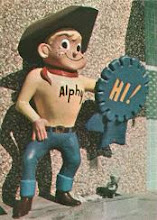
Among the most important upgrades were the changes to Woolco’s Red Grille restaurants, consistently one of the highest grossing and most profitable areas of the store. The objective here was to move away from the cafeteria image (although the serving line would be retained) to more of a restaurant/coffee shop, along the lines of an Alphy’s (owned by L.A.- based Alpha Beta Acme Markets) or a Wag’s (Walgreen’s restaurant operation, with locations in the Chicago, Tampa and Miami areas). The garish red and white-striped awnings were done away with, replaced with a classier looking soffit and a row of white-globed lights along the service line. Comfortable booths were added, adding to an overall more elegant, subdued atmosphere. Red carpeting was laid down, and the entire area was semi-enclosed, giving patrons a “feeling of separation from the store rather than one of a crowd of shoppers hanging over their shoulders while they eat”. Probably the biggest change of all for the Red Grilles was their relocation from their previous location in the back of the store to the front, complete with their own outside entrances. The company’s two new stores in Wichita provided Woolworth top management an excellent basis for comparison – one Woolco had the Red Grille up front, the other in the standard rear location. Although this was unintentional (the plumbing had already been set for a front location in one of the stores and couldn’t be economically moved), the difference in restaurant revenue between the two stores was significant enough to prompt a front-location mandate for Red Grilles in all future Woolcos. Lastly, the Red Grilles of many older Woolco stores, including the company’s first Columbus, Ohio unit, were remodeled to the new image (though for cost reasons most remained in their original location in the store), something that was less frequently the case with other departments.

The company’s new “flagship store” opened in Langhorne (Bucks County), Pennsylvania, in Lincoln Plaza, adjacent to the Oxford Valley Mall in June 1974. This new 155,000 square foot Woolco, the largest in the fleet, was a true showplace - incorporating everything in the company’s new bag of tricks. Ironically, this moment of triumph coincided with Woolco’s startling decision to introduce a new policy dispensing with grand opening festivities of any sort. This did not escape the notice of the local paper, the Courier Times, which headlined the following day’s article “No ceremony, but it’s the biggest”, and led with the following sentence – “There was no ceremony to mark the occasion. No beauty queens (!), bands or politicians. Not even a ribbon cutting”. The (no doubt embarrassed) store manager offered an explanation: “We want to get open to the public rather than delay anything.” It’s a shame the word “meh” wasn’t yet part of the American lexicon – “Welcome to your new store, Ma’am. Meh. Fairly fresh, isn’t it?” In fairness, the article did record the presence of red, white and blue banners and a “Woolco Grand Opening” sign, things that always seem to warm the hearts of readers of this site.

At the end of 1974, there were 242 Woolco stores in 36 states and 86 in Canada, including 14 new catalog(ue) stores , a concept that (for Woolco) was unique to Canada. In Great Britain, whose first Woolco opened in 1967, there were now a total of 9 units. In 1977, Woolco finally surpassed the Woolworth’s stores in gross sales. By the end of 1979, there were 312 Woolco stores in the United States, 114 in Canada and 13 in Great Britain.

By this time Woolco had entered the long overlooked Chicago area, opening their first two area locations in late 1973, in Villa Park and Homewood. Eventually more Chicago area locations would follow, including Niles, Schaumburg, Oak Lawn, Matteson, DeKalb, Wheaton , and Rolling Meadows. This last location was originally opened as a Topps Super City discount store in 1961, and had sat vacant for over 2 ½ years after Topps, a store I fondly remember shopping at, closed down their entire operation. In 1978, expanded and refaced, it reopened as a Woolco, only to close four years later at the chain’s demise. After another long vacancy, it opened yet once more, this time as a Dominick’s Finer Foods store (and as of two years ago at least, the last time I saw it, was vacant again!)

In the mid-70’s, however, Woolco was still entering other new markets as well, opening additional stores in Pennsylvania, New Mexico and Rhode Island in 1975/6, for example. The Rhode Island location, at the brand new Lincoln Mall, is the lone Woolco store I can recall shopping at, having visited there a least once or twice each year during my family visits there, an August ritual for years. We never ate at the Red Grille – the siren song of the Newport Creamery was just too much to resist. This store became a Caldor after Woolco’s demise. One area stands out in my memory above all others, and that is of the record department, completely decked out in posters at one point for Peter Frampton’s “I’m in You” album (1977), his follow-up to the monster-selling double lp “Frampton Comes Alive”, and at another time for (the less remembered) Rex Smith’s “Sooner or Later” album (1979). (Great. Now I’ll be singing “You Take My Breath Away” all night. At least my voice is deep enough now.)

Woolco made a major advance into the metropolitan New York market in 1976, when it took over five former W.T. Grant stores in Suffolk County (Long Island), New York. The individual locations were Bridgehampton, East Patchogue, Lake Ronkonkoma, Riverhead and Rocky Point.

By late 1980, however, despite the continuing profitability of F.W. Woolworth, the parent company, it had become clear that Woolco was slipping. While the combined Woolworth/Woolco stores division was still contributing over half the total company’s sales in 1981, it accounted for only 21 percent of the total profits that year. Taken alone, the Woolco stores would have posted a substantial loss. The first rumblings of store closings began to circulate. That year, Woolco, with $2.1 billion in sales was now in third place beyond its fellow Retail Class of 1962 members Kmart (an astonishing $16.6 billion) and Wal-Mart (an up-and-coming $2.5 billion). Another ’62 class member, Target, was on Woolco’s heels with $2 billion. Still safely behind were Zayre($1.4b), The May Co.’s Venture ($612 million) and Federated’s Gold Circle ($397m) and Richway ($226m), operated as separate divisions at the time.

Of course, the 1974 revamp was stale by this time, and Woolco didn’t have another act waiting in the wings. In their last issue of 1981, Business Week published an article entitled “Is Woolworth too late in upgrading Woolco?” The answer would soon be all too evident.

In a last great effort to turn things around, Woolworth hired themselves an executive with a superb track record, Bruce G. Allbright, president of Dayton-Hudson’s Target division, putting him in charge of the Woolworth/Woolco operation. Allbright, who had played a key role in Target’s rapid ascendancy to the heights of the discounting world, began work on January 1, 1982 with a mandate to fix Woolco as priority one. Ambitious plans were announced, including an “upscale renovation” of the Woolco stores. There would be fundamental changes as well – the reestablishment of separate divisional management and advertising groups for Woolworth and Woolco, in effect correcting a ten-year old mistake.

Sadly, none of this was to be. Although Allbright’s bid to turn Woolco around would be unsuccessful, he did perform an extremely valuable service for Woolworth. His astute analysis of Woolco’s plight and the actions necessary to correct it convinced Woolworth’s board that the process would take far too long, cost far too much, and still possibly fall short. On September 24, 1982, Woolworth announced the closing of all 336 U.S. Woolco stores. The end was at hand. Or was it?

Within a few days after the announcement, the business pages were buzzing with word of interest in the Woolco operation from an unusual source. 29-year-old Sheikh Mohammad al-Fassi of Saudi Arabia announced his intention to buy the failing chain for the expressed purpose of saving the jobs that would otherwise be lost. Preparations for negotiation with the Sheikh, a Miami resident at the time, were put in place. Within a few days, Woolworth lawyers had convinced the Sheikh that it was “in Woolco’s best interest to close the stores”. The end was here. In December 1982 Bruce Allbright returned to Dayton-Hudson, with a year of Woolco war stories under his belt, as vice chairman of Target. Two years later, he would be named Target's chairman and CEO. Allbright would retire in 1989 as president of Dayton-Hudson. The Woolco store buildings were sold off to a “Who’s Who” list of retailers, and many still operate today behind a myriad of nameplates.

The Woolco era would live on for many more years in Canada, coming to an end in January 1994, when Woolworth sold 120 of the 142 stores there to Wal-Mart, providing that company its entrée to the Canadian market. Eventually, the balance of the stores would be sold off to other retailers, including Zellers.

In the years immediately following the Woolco closure, F.W. Woolworth would continue to operate its famous namesake variety stores. By 1993, the Woolworth’s stores were in steep decline, and half of the 800 remaining variety stores were shut down. On July 17, 1997, an American retail epoch came to an end when the remaining U.S. Woolworth’s stores were closed. The British Woolworth stores, one of a rarefied class of American brands (Heinz Foods is another example) that Britons have truly claimed as their own, closed down earlier this year. Since the late 70’s, Woolworth has emphasized its Foot Locker shoe division, which was well positioned to capitalize on the exploding (and to this day, continuing) popularity of sports (and music) celebrity-endorsed athletic shoes. Another brand, Champs Sports, was added in 1989, forming the Woolworth Athletic Group. In 1999, the F.W. Woolworth Co. was renamed Venator Group, and two years later adopted its current name, Foot Locker, Inc., an appropriate moniker for its current business.

The first photo, from 1974, shows an up-close view of the “new” Woolco sign, gleaming in the night. The second shows a daytime shot of the new façade with a family of happy shoppers leaving with their treasures. (Looks like one of them is carrying a “target” – what might the significance of that be?) The third photo depicts a very attractive in-mall Woolco entrance. Next is the lingerie department, followed by the sporting goods section, where another “target” (OK, now I’m convinced it’s Freudian.) can be seen in the background. Lastly, a young man (John Schneider from “The Dukes of Hazzard”? Nah.) shops for TV sets in the store’s electronics department. Below are a series of black-and-white shots from 1974, depicting the Langhorne, Pennsylvania store mentioned above. First is the “new look” Red Grille, complete with front-facing windows. Next are the men’s and boys’ departments, followed by the record department, sporting what I think may be black-light posters displayed above. The last photo shows a living room grouping that would do James Lileks proud. The couch in the foreground defies description. I’ll try anyway, though...how about “Scalloped Florentine”? I sure hope it came with optional clear vinyl slipcovers.

Photos two through five are vintage Woolworth publicity photos. The first color photo and all of the black and white shots are used by permission of Chain Store Age, to whom I extend my sincere thanks!
Steven Swain has pointed out that Woolco did in fact carry out some of the "upscale renovations" referred to above during the last year of their existence. A while back he featured the Woolco location at the Blacksburg, Virginia University Mall on his website, LiveMalls, complete with a couple of great black and white photos.

Wednesday, April 30, 2008

Kmart...Eat Here and Get Gas!


You know, there’s really nothing like a Double K Burger when you’re craving that great Kmart taste! Mmmmmmm!

Yes, my friends, there really was such a thing as a “Kmart Chef”. After five years of outstanding growth, Kresge began to explore ways to leverage the success of Kmart. Though virtually all Kmarts had in-store snack bars and/or concession stands, Kresge figured that a free-standing fast food restaurant, complete with the Kmart brand name and located next to the main store, would be an effective way to snare those customers who managed to escape the store with their lunch or dinner dollars still in pocket. It was also assumed that the highly visible locations of the Kmarts – typically on high-traffic streets or adjacent to highways - would draw an ample number of customers as well. The first Kmart Chef, pictured above, was opened in October, 1967 next to the Pontiac, Michigan Kmart. Plans were announced for 10 more to open in 1968.

The stores were somewhat of a hybrid between a McDonald’s-type fast food restaurant and a cafeteria. Customers walked up to a counter (ala McDonald’s) but were given a tray to push along a stainless-steel cafeteria line. The Kmart Chefs did have interior seating, something that McDonald’s was in the process of a frenetic transition to as they replaced their famous red and white-striped walk-up drive-ins with sit-down restaurants. The initial “limited, high-turnover menu”, as Kresge described it, consisted of “hamburgers, cheeseburgers, frankfurters, fish sandwiches (gotta be ready for Lent), French fried potatoes, fried apple turnovers, assorted carbonated and fruit drinks, coffee, hot chocolate and milk”. As the outdoor sign said, hamburgers were initially 18 cents. That same year, in a controversial but fiscally necessary move, McDonald’s finally raised the price of their burgers from their traditional 15 cents to 18 cents as well.

As it turned out, only a small number of Kmart Chefs were ever opened, with the 10th store, an Albuquerque, New Mexico unit, not even opening until 1971. At that time, there were Kmart Chefs in Pontiac, Clemens and Warren MI, Erie PA, Moline IL, Wichita KS, Kansas City MO, Houston and Lubbock, TX. It was truly a random strategy, to put it charitably. The Kmart Chefs were closed down in 1974.

More successful in the long run were the Kmart gas stations. Many Kmarts had auto centers, generally free-standing units, and the addition of a Kmart-branded gas station was first tried in April, 1967 in the parking lot of an Atlanta Kmart. Pictured above is the original gas station (Check out the 100 octane gas - that stuff would probably be eight bucks a gallon now!). Two more Kmart gas stations were opened in the Metro Atlanta area the following January, beginning a strategy that Kmart has employed on and off ever since.

Sunday, December 23, 2007

Sears - Wish Book Wonderland


Getting super close to Christmas, so let’s take a very quick look at Sears, a veritable Warehouse of Christmas Dreams for generations of Americans. This particular store was located at the Logan Square shopping center in Norristown, Pennsylvania, not far from Philly. It was brand new and all decked out for Christmas at the time this photo was taken in 1966. The building still stands (with the three flagpoles, yet!) in recent photos, but is no longer a Sears.

Speaking of the Wish Book, here’s a great website that features vintage department store Christmas catalogs – Sears, Penneys, Wards and more – that a group of folks have painstakingly scanned in full. It’s a real treat!

Tuesday, December 11, 2007

Tales of the Grand Union


A familiar face to grocery shoppers throughout the Northeast states (and even more so to those Northeasterners who vacationed in Florida), the late, great Grand Union Company also held the distinction of being one of America’s oldest grocery chains, second only to The Great Atlantic and Pacific Tea Company.

The company was founded in Scranton, PA in 1872 (thirteen years after A&P) by Cyrus D. Jones, who would soon be joined by his two brothers to form the Jones Brothers Tea Company, the predecessor to Grand Union. To augment the sales of their lone store, Jones initiated home delivery service to customers in the area, planting the seeds of what would become Grand Union’s “Route Division”, an operation that would continue into the 1950’s. The “Grand Union” name was adopted in the last years of the 19th century for a subsidiary of Jones called the Grand Union Tea Company.

The chain had grown to 200 stores and 500 horse-and-buggy equipped route salesmen by its 40th anniversary in 1912. The corporate offices were set up in New York. By the early 20’s, however, things began to falter, with falling profits on an unwieldy assortment of stores, routes and unnecessary manufacturing operations.

Help was on the way in the form of two former A&P managers recruited in 1924 – J. Spencer Weed as President and 28-year old whiz kid Lansing P. Shield as Controller. Within four years, the team had streamlined the company, sold off the non-core (as we refer to it in current business-speak) manufacturing plants, and led the company back to profitability. In 1928, the Jones family sold out their ownership stake and the entire company was officially rechartered as the Grand Union Tea Company.

The photos above (featuring the fabulous "Food-O-Mat", an L.P. Shield invention) are from 1946.