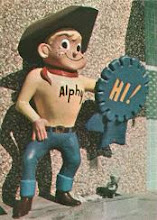
In the early 1960’s, several leading supermarket chains began a concerted effort to augment their traditionally razor-thin grocery margins by greatly increasing their offering of non-food items. Typically, this category included outdoor accessories, sporting goods, cameras, small appliances, basic clothing and a host of other items, which were usually marked-up at more than twice the rate of food products.
This trend was accelerated with the introduction of the “food/drug combination store” – essentially two adjoining stores - by such chains as Albertsons of Boise, Idaho and Jewel Food Stores of Chicago in the opening years of the decade. Safeway, far larger than either of these two companies, jumped into the fray in October 1962 with the establishment of their “Super S” division. The Super S stores would be newly constructed units, built in conjunction with an adjoining new Safeway. The two stores would share an entrance portal between them, but would be operated as separate businesses with their own checkstands. Super S would sell the products mentioned above, in addition to health and beauty products, and each unit would feature a full-service pharmacy. The stated goal was to have the first combination Safeway/Super S store open during the following March in Anchorage, Alaska (hey, why not?) with a total of five stores to be opened in 1963. Six stores were actually opened that year, with 22 more following in 1964.
Surprisingly, especially given Safeway’s outstanding overall performance throughout the period, the Super S stores were not a successful venture. In 1965, twenty-three new Safeway/Super S stores were opened. That same year, however, 22 of the existing (and still very new) Super S units were sold off to Salt Lake City-based Skaggs Drug Centers, Inc., in a transaction that included all Super S’s east of the state of California except for two Washington, D.C. stores. The adjoining Safeways continued to operate. By 1969, the Super S store count was stagnant at 30 stores, and in 1971 the balance of the Super S stores were disposed of.
I surmise that one factor involved in the failure of the Super S concept was the fact that they were separated by a full-length wall from the Safeway, save for the relatively small entrance portal between them. To me, this arrangement could only serve to discourage customers from wandering the second store after they had completed their purchases from the first. In Chicago, for example, the Jewel/Osco combination stores (which have been successful for 45 years now) had no such wall (*see comments), and any item from either store can be purchased at the Osco counter or any of the Jewel checkstands. Most Jewel/Osco stores opened in recent decades in fact share checkstands.
Sadly, the ultimate advantage to this divided arrangement, then, was to facilitate the conversion of the Super S operations to a Skaggs or other successor brand.
This trend was accelerated with the introduction of the “food/drug combination store” – essentially two adjoining stores - by such chains as Albertsons of Boise, Idaho and Jewel Food Stores of Chicago in the opening years of the decade. Safeway, far larger than either of these two companies, jumped into the fray in October 1962 with the establishment of their “Super S” division. The Super S stores would be newly constructed units, built in conjunction with an adjoining new Safeway. The two stores would share an entrance portal between them, but would be operated as separate businesses with their own checkstands. Super S would sell the products mentioned above, in addition to health and beauty products, and each unit would feature a full-service pharmacy. The stated goal was to have the first combination Safeway/Super S store open during the following March in Anchorage, Alaska (hey, why not?) with a total of five stores to be opened in 1963. Six stores were actually opened that year, with 22 more following in 1964.
Surprisingly, especially given Safeway’s outstanding overall performance throughout the period, the Super S stores were not a successful venture. In 1965, twenty-three new Safeway/Super S stores were opened. That same year, however, 22 of the existing (and still very new) Super S units were sold off to Salt Lake City-based Skaggs Drug Centers, Inc., in a transaction that included all Super S’s east of the state of California except for two Washington, D.C. stores. The adjoining Safeways continued to operate. By 1969, the Super S store count was stagnant at 30 stores, and in 1971 the balance of the Super S stores were disposed of.
I surmise that one factor involved in the failure of the Super S concept was the fact that they were separated by a full-length wall from the Safeway, save for the relatively small entrance portal between them. To me, this arrangement could only serve to discourage customers from wandering the second store after they had completed their purchases from the first. In Chicago, for example, the Jewel/Osco combination stores (which have been successful for 45 years now) had no such wall (*see comments), and any item from either store can be purchased at the Osco counter or any of the Jewel checkstands. Most Jewel/Osco stores opened in recent decades in fact share checkstands.
Sadly, the ultimate advantage to this divided arrangement, then, was to facilitate the conversion of the Super S operations to a Skaggs or other successor brand.
As the years have rolled on, of course, Safeway’s store footprints and product offerings have grown tremendously, and undoubtedly most products once sold at the Super S stores can today be found under the roof of a regular Safeway. All’s well that ends well.
The top photo, from 1964, features a Safeway/Super S from San Jose. The other three photos are Super S interiors from a slightly older store in Carmichael, California.