Showing posts with label Turn-Style. Show all posts

Monday, January 27, 2014

Chicago's "Big Snow", January 1967

One of the most storied events in Chicagoland history took place 47 years ago this week. From early morning on January 26, 1967 through about 10am the following day, 23 inches of snow fell, and a city that had long prided itself on an ability to push through harsh winters was brought to a standstill. There have been other record-setting snowstorms in Chicago in the years since – in 1979, 2011, and whenever I’m trying to fly out of Midway Airport in January, but when one hears the phrase “Chicago’s Big Snow”, 1967 is what’s being referred to.

This amazing set of photos comes to us courtesy of Susanne Peters, and depicts scenes of various retail locations in the near-north suburb of Skokie, on a bright sunny day in the aftermath of the Big Snow.

First up is the Turnstyle-Jewel Family Center on Skokie Boulevard, where a dump truck is being loaded with snow. Opened in early 1963, this Turnstyle was the second location opened by Jewel Tea Company after completing its acquisition of Turnstyle (a Boston-based chain of discount stores) the previous year. Jewel had opened up a Racine, Wisconsin location in 1962, and another Turnstyle Family Center at the corner Harlem and Foster opened around the same time as the Skokie store. 

In my years of enthusiastic perusal of vintage supermarket photographs, I had yet to see one where the store’s facade was finished in bathroom tile. But here it is – The National Food Store at the corner of Niles Center Road and Skokie Boulevard. Originally opened as a Sure Save Food Mart, the store, along with 10 other units, came under National Tea Company ownership in 1961. It retained the Sure Save name for some years afterward, but by 1967 had been rebranded as a National.

This one would be of primary interest to those who grew up in the area, but it’s a nice shot. I sure would have hated to be the one to clean those store floors after all that snow and slush was tracked in!

Here’s a neat view of Dempster Street, showing among other things a combined Firestone Tire dealership/Mobil gas station. To this day, the “Complete Car Service” signage can be seen on some older Firestone stores. The Mobil portion sports their “transitional” signage – the 1966 logo (which caused quite a stir in design circles and is still used today) contained within 1950’s-style Mobil sign frames. In the distance is an Aunt Jemima’s Kitchen, one of a long-gone chain of family restaurants based on the pancake icon.  (I’ve been waiting my entire life to use the phrase “pancake icon”. A dream realized, this is.) There weren’t a lot of Aunt Jemima’s Kitchens, but they had a fairly widespread geographic distribution, as can be seen here.


Another shot of the Firestone dealer, with a “1967 License Plates Installed Free” sign in the window. Illinois issued new plates every year until 1979, the end of a tradition I’d enjoyed every year as a kid – the anticipatory “what color will the plates be this year?” game. Yes, friends, I lived an exciting life in those days. 


And what snow-trudging shopping trip would be complete without a trip to the Golden Arches? Unfazed by the snow, “Speedee”, McDonald’s early-years mascot, beckons all to partake of the chain’s legendary 15-cent hamburgers. (In your car, of course. Indoor seating was still a couple of years away.) 1967, in fact, was the last year of the 15 cent hamburger price, as after much gnashing of teeth, McDonald’s raised it to 18 cents apiece that year. Many of these signs were then modified to replace the “15c” panel with one saying “Coast to Coast”. By the early 70’s, most McDonald’s stores of this type were torn down and replaced altogether with indoor-seating restaurants and modern signs. 

A Wanzer’s truck sits in front of the McDonald’s. Wanzer (“Wanzer on milk is like sterling on silver”), a large Chicago-area dairy, was purchased two years later, in 1969, by The Southland Corporation, the Dallas-based parent of the 7-Eleven stores. Immediately it became the house milk brand for “The Sev” in the Chicago area, and my folks bought a good many gallons of milk there.

Well, once again I’d like to thank Susanne for letting me show you these great pictures. And wherever you live, I hope it’s “just a dusting” this week!   

Sunday, May 12, 2013

Turn-Style, Mom and Me

Store sale flyers. Every week, tons of these things show up – crammed in the mailbox, stuffed in the Sunday paper, sliding out onto the living room floor. Do people ever save these things? I certainly don’t.   

Well, except for this one, that is, and not for the reasons you’d think. Mod 70’s styles at crazy 70’s prices. A long gone classic discount chain, Turn-Style, and a great multicolored version of their last, and best, logo.
No, the reason I’ve hung onto these is because one of the young women featured is none other than my very own Mom, Linda. 

For a year a half in my early grade school years (1970-71) she modeled for ads for a number of companies including Turn-Style, their sister division Jewel Food Stores, and Lytton’s, a famed old-line Chicago clothing retailer. These ads are from May and June 1971. Her modeling career was brief – the hours were long, the pay wasn’t great and the better jobs, like this one, were few and far between. Later that year she entered nursing school, from which she graduated two years afterward. Model or not, I’ve always been so proud of her, and she’s always encouraged me at every step of the way in life.
  
Mom is on the far left in the photo. On the far right is Brenda Broce, a very popular Chicago model. Unfortunately I don’t recall the name of the woman in the sailor’s hat, but she was also a familiar face in those years. Best known of all was the young woman “talking” to my mom, second from left. She was Janet Langhart, an extremely popular model in town who by this time was also working as a news feature reporter for the local CBS TV affiliate, WBBM. In the mid 70’s she moved to Boston where she hosted the highly-rated “Good Day” morning show. Eventually she married William Cohen, a U.S. Senator from Maine and later Defense Secretary under President Clinton.
Here they are again, with Mom second from the left in a “stylish” wig this time. Thankfully, she spared me years of night terrors by not wearing it at home.


She had nothing to do with these three pages, but I thought you’d like to see ‘em anyway. I like the little guy flying the plane with the “Turn-Style propeller”. Better keep the nose up on that thing, guy! 
In polka dots this time, in the only photo that shows her real-life hairstyle at the time. One of these days I need to ask her how many hours it took to put those shoes on.
One Saturday afternoon, my Dad, brother and I were out running errands, keeping occupied while a photographer did test shots of Mom in our kitchen. (3,000 photos of her holding a box of “Pillsbury Extra Lights” pancake mix, as I remember.) When we returned, he said "Let's take some shots with the kids." That’s 7-year old me on the right, and my 3-year old brother, who’s been taller than me since 1983, on the left.

The funny thing is, we had been out shopping at some discount store – Zayre, Kmart, Community Discount, maybe even Turn-Style – of course I don’t remember which. As I told my friend Adrienne a while back, I had no idea that decades later this would be useful information.

In any event, Happy Mother’s Day! 

Friday, January 9, 2009

The Opening of Dixie Square Mall, 1966

The photos above were taken in the fall of 1968, two years after the grand opening of the Dixie Square Mall, located in Harvey, Illinois, a far south suburb of Chicago, on the Dixie Highway (Illinois Route 1) between 151st and 154th streets. Dixie Square, often referred to in its early years as “Dixie Square Shopping Center”, and later on occasionally as “Dixie Mall”, is undoubtedly the most famous “dead mall” of all time. The subject of a new book, a film project, countless websites and more devotees than blackstrap molasses, Dixie Square has become a most unlikely icon of American pop culture.

Why all of this notoriety, one would reasonably ask? There are a number of reasons – first, there’s the simple fact that it was a new, enclosed mall with major anchors (Penneys and Wards), built during an era when many localities were seeing …well, their first new, enclosed malls with major anchors. Secondly, for a medium-sized mall, Dixie Square had some very appealing, high-concept design features. Third, the mall was only open for twelve short years, an extremely brief lifespan. Fourth, amazingly, substantial portions of Dixie Square still stand, more than 30 years after the mall’s closure – a fascinating, albeit dangerous, modern-day ruin.

But the most significant reason, far and away, was the 3 minutes and 30 seconds of celluloid immortality the mall gained in its most celebrated role, a year after it had ceased its primary function. Dixie Square was the site of the famous indoor car chase scene (plus some preliminary hijinks in the mall’s parking lot) in the 1980 film classic The Blues Brothers.

As mentioned, there are some great websites, filled with the fine work of (very brave) modern-day photographic explorers that are dedicated to preserving the history of Dixie Square Mall, so I won’t attempt to go into comprehensive detail here. Instead, I’ll try to touch on some of the major points of Dixie Square’s storied history.

On March 26, 1964 the Blue Island Sun-Standard announced the pending approval by the city of Harvey of a petition to annex the 58 acre site of the rundown Dixie Hi Golf Course for development as a shopping center. On October 12th of that year the annexation was formally approved, and the development group, led by Meyer C. Weiner, broke ground soon afterward.

Architects Hornbach and Steenwyk of Grand Rapids, Michigan were engaged to design the “L-shaped” center, which would feature some 60 stores, including two anchors - Montgomery Ward and Penneys (each with an unattached Auto Center), with a Jewel Food Store, a Walgreens drug store and Illinois’ largest Woolworth’s rounding out the major tenants. The latter two stores would each feature a restaurant, Walgreen’s “Grill Room” and Woolworth’s Harvest House.

The first portion of Dixie Square to operate was the Montgomery Ward store, which opened to the public on October 21, 1965, preceding the rest of the mall by nearly a year. The single-story Wards unit would be Dixie Square’s largest store at 182,000 square feet, including the 20-bay auto center.

On August 31, 1966, with 24 of the planned 60 stores already open and another 12 ready to launch, a dedication ceremony was held, featuring singer Mel Torme and a number of local celebrities. Among these celebrities was WCFL’s “Trooper 36-24-36”, the Top 40 station’s on-air traffic reporter Jane Roberts, a beautiful blonde who frequently made public appearances on the station’s behalf in white short-shorts and the station’s call letters “prominently displayed” on her outfit. (That’d go over well today, eh?) During this time, Jane Roberts was also a regular on WCFL’s legendary “Chickenman” radio segments, a send-up of the wildly popular Batman TV show.

On November 10-12, 1966, Dixie Square’s “official” grand opening was held, hailing the completion of the mall and especially that of its eagerly awaited second anchor, the impressive 2-story, 144,000 square foot Penneys store. Like the dedication ceremony, this too was a grand affair, featuring country music comedians Homer and Jethro, accordionist Art Van Damme (visions of a “Dixie Square Polka” are dancing in my head), and WGN-TV’s "Ringmaster Ned" Locke of the Bozo’s Circus show, a beloved ( and today, fondly remembered) figure of Chicago television, among others.

The real star, though, was the mall itself. Featuring a 60-foot tall tower sign which “(could) be seen from the Illinois Tollway and the Calumet Expressway” outside, sculpture-laden fountains and “ultra-real” tropical foliage (read: artificial) indoors. A truly stunning feature was the “Wonderfalls” display in the mall’s atrium. Engineered and built by Navan, Inc., a division of military aircraft and aerospace manufacturer North American Aviation, the Wonderfalls were tantalizingly described in a Dixie Square grand opening ad in the South End Reporter: “'Flowing' columns emerging magically from the ceiling and dropping 25 feet to disappear mysteriously in a planting of rocks, flowers and trees”…"From a distance, the columns appear to be marble; closer inspection reveals that the columns are composed of liquid falling as droplets in precise paths. Dixie Square’s flowing columns are produced with a special spaceage liquid descending stretched strands of Nylon. The liquid is much heavier than water so that it clings to the strands in droplet shapes as it descends. More than a quarter million droplets are in motion in the five columns at any given moment”.

Through the balance of the sixties, Dixie Square Mall was very successful, drawing large crowds and hosting a wide variety of community events including contests of all sorts, celebrity appearances, Christmas choir programs, Santa appearances (arriving by helicopter, no less!) and all of the wonderful ballyhoo associated with malls of that era.

In 1970, another major anchor was added to Dixie Square. Jewel Companies, Inc., decided to double their investment, so to speak, in Dixie Square with the addition of a Turn-Style discount department store at the rear of the mall. As mentioned, a Jewel Food Store was already in place.
For the city of Harvey, however, things were changing. In 1970, the city was at the approximate midpoint of a huge demographic shift which led to racial tension, described in detail in this Encyclopedia of Chicago article. As the article mentions, Harvey’s “rates of crime, unemployment and poverty were among the suburbs' highest”, and compounding its problems, the city had “lost its industrial and commercial base”. These were hardly ideal conditions for a thriving mall (or much of anything else, for that matter), and Dixie Square’s fortunes would fall precipitously over the next few years.

To make matters worse, the Dixie Square property was the site of a number of sad incidents, including assaults, murder, and the accidental death of a well-known stuntman as he neared completion of a pole-sitting event in the mall’s parking lot. The cumulative effect of these tragic events did much to tarnish Dixie Square’s image.

Despite these setbacks, efforts were made to keep Dixie Square viable. As late as the fall of 1974, such high-profile celebrities as the Harlem Globetrotters (arguably at the peak of their popularity at the time) were booked to entertain mall customers for Dixie Square’s 8th anniversary. Some decorative upgrades were also implemented around this time, including the installation of a huge, funky architectural tent canopy at the mall’s entrance, which is clearly visible in the Blues Brothers sequence. The canopy was designed by a Wisconsin firm called Chrysalis East (a great 70’s name if there ever was one), who provided the massive fabric structures for both permanent installations and special events, including Chicagofest, a series of concerts that were held at Navy Pier in the late 70’s and early 80’s and featured scores of major musical acts ranging from Muddy Waters to Pablo Cruise to Alice Cooper. Coincidentally, the Blues Brothers played there a couple of times (’79 and ’80, I think. Sure wish I’d seen them.), and Sinatra played there in 1982 (Really wish I’d seen him. I did see Cheap Trick, though. How’s that for varied musical taste?).

These efforts did little to slow Dixie Square’s downward slide, and by the mid-70’s vacancies starred to appear, with increasing frequency as time passed. The beginning of the end came on August 30, 1976 when Montgomery Ward announced the closing of its Dixie Square store, effective October 4th. The Southtown Economist quoted the Wards district manager as follows: “Over the past several years we have invested heavily in the nearby Evergreen Park, Munster and Matteson stores, all within a five-mile radius of the Harvey store”. It would become a familiar mantra as other chains began to pull out of Dixie Square in droves. In early 1977, the Karoll’s Men’s Store, pictured above, closed and moved to nearby Homewood. Polk Bros. had already closed – steering their customers to (a good bit further away) Burbank.

One of the strangest aspects of Dixie Square’s demise had to do with the Turn-Style store. With its discount pricing approach, one could have easily expected the Dixie Square Turn-Style to do strong business in light of the area’s declining median income. Problem was, the store was located in the back of the mall with no sight line from Dixie Highway. Out of sight, apparently it was out of customers’ minds as well, as the intriguing advertisement below (from 1972, when the store was a mere two years old) tried to address. When Jewel decided to shutter the Turn-Style operation in 1978, most of the stores went to the May Company for conversion to Venture stores. Sadly but understandably, May passed on the Dixie Square location.

In January 1978, the other shoe dropped when the Penneys store (known of course as JCPenney by this time) closed, its customers referred to the year and a half old Orland Square Mall Penneys. A full year later, closeout merchandise from area JCPenney stores was hauled into the Dixie Square location for one final blowout sale, nicknamed all-too-appropriately “Dixie’s Last Gasp”. The final holdouts were Jewel and Walgreens, both of whom pulled out in mid-1979. Dixie Square Mall passed into history, likely to soon to be forgotten.

Until Dan Aykroyd, John Belushi and director John Landis came along. Aykroyd and Belushi, two members of the original Saturday Night Live cast (and ardent Blues fans), had developed the concept for “The Blues Brothers” through a series of skits on the show starting in 1976. What appeared at the start to be mostly a comedy effort quickly gained a measure of musical credibility as the pair assembled a crack group of legendary session players, including guitarist Steve Cropper, saxophonist “Blue” Lou Marini, bassist Donald “Duck” Dunn and other top-flight musicians. And Belushi and Aykroyd turned out to be decent singers as well, or were at least a good fit for the songs they picked. Of course, humor was still a huge part of the equation, with the funky sunglasses, the “fercocter” suits (That description is from the movie, and I have no idea if it’s vulgar or not. Or even if it’s spelled correctly.), and the crazy stage moves. By the time their record album Briefcase Full of Blues came out in 1978, they were a national sensation. The movie project was announced soon afterward.

The script (written by Aykroyd and Landis) called for an indoor chase scene, and since the story was set in Chicago, and much of the actual shooting took place there, Dixie Square’s availability came at the perfect time. Of course, the planters, benches and much of the rest of the décor were gone, replaced with trellises, carts and other items that would easily break away when hit by the cars. The Jewel Food Store was restocked, at least in front of the camera’s eye, and the mall’s store signs were all relit. A number of retailers showed up in the “fictional Dixie Square” that weren’t part of the actual mall, including an Oldsmobile dealership. It’s my understanding that the Dixie Square Penneys store sported the 1960’s logo (a true classic and one of my all time favorites) throughout its entire existence, and that the signs were pulled down after the store closed. For the purposes of the filming, the company supplied the new (and still current) “JCPenney” logo signage, presumably to maximize promotional value. Most notably, since Walgreens didn’t want to be associated with the film (Guess it didn’t fit their concept of a “drive-thru” pharmacy! Ok, I’ll go back to my room.), the space was taken by a willing Toys “R” Us.
Living in the Chicago area and being in high school at the time, the excitement I saw surrounding the film was palpable. On several occasions, the local news covered the filming as it progressed around town, with such news flashes as “Film crew damages homeowner’s sidewalk!” and other vitally important stories. It all served to build interest, and we awaited the movie’s Summer 1980 release with bated breath.

We weren’t disappointed. It had a great story, musical legends including Aretha Franklin, Ray Charles, James Brown, John Lee Hooker and Cab Calloway, a hilarious role from Carrie Fisher (after the very serious Princess Leia) and great comedic actors including John Candy, but topped of course by Belushi and Aykroyd. For those of us from Chicago, it held a special charm with so many local icons forming the backdrop of the movie – Wrigley Field, the CTA, Lower Wacker Drive, the Civic (Daley)Center, and on and on. Oh, and a great chase scene filmed inside some mall I’d never heard of...at least not yet.

“The Blues Brothers” stands as a true modern classic, shown frequently on cable TV and available on DVD. In 1998, it spawned a (not exactly classic) sequel. Many dreams and schemes for the redevelopment of Dixie Square Mall have been floated over the years, some as recently as 2007. But it still sits there, awaiting its own sequel - that elusive combination of civic vision and corporate investment to return to Harvey what it once had – a safe, up-to-date shopping center.

In the meantime, of course, the legend of Dixie Square Mall continues to grow.

A very special thanks goes to Dan Steenwyk, Paul McVay and Michael Brown for making these photos available. All of the photos are © 1966 by Steenwyk Architects, ALL RIGHTS RESERVED.

Top to bottom, the photos can be described as follows: An angled view of the Penneys and Walgreens stores at the main entrance to the mall, a square-on view of the Penneys entrance, an interior view looking towards Penneys’ inside entrance, the wonderful Wonderfalls, a close-up of the mall entrance between the Penneys and Walgreens, a close-up of another mall entrance, (the Wards store is to the right, and the Baskin-Robbins sign can be seen peeking out of the left edge), the Wards inside entrance with some impressive metalwork (on the impressive fountains), and the Wards Auto Center against the chilly fall evening sky.

Below are some early newspaper ads, including one that puzzled me at first. The December 1965 “Sidewalk Superintendents Wanted” ad is probably not a solicitation for supervisory help as I thought at first glance, but instead a nudge to the curious to come out and watch the mall’s construction progress, hopefully spreading the exciting word afterward. In today’s environment of litigation and OSHA standards this would be a definite no-no today. The second ad is for the October 1965 Montgomery Ward grand opening, the third from November 1966’s official Dixie Square Mall grand opening, and the last, the somewhat desperate Turn-Style ad referenced above.

Some additional notes: A couple folks have informed me that the interior scene where the cars crash into the Jewel Food Store was actually filmed inside the Penneys store, mocked up to look like an interior entrance for Jewel. Apparently this particular Jewel did not have a major inside entrance from the mall. I would guess the film crew pulled down the outside "JEWEL" signage and reinstalled it inside for filming. Also, for an up-to-the-minute (or at least up to this past January 11) look at Dixie Square, Jon Revelle has kindly sent along links to some excellent new photos and a great video (complete with soundtrack - and snow!).

Thursday, July 10, 2008

Last Spin of the Turn-Style


The mid/late-1970’s proved to be the Waterloo of a number of discount retail chains with a significant presence in Chicago. The late George Lazarus, longtime business writer for the Chicago Tribune, listed the recent casualties in a 1978 editorial – Topps (Interstate Stores), Korvettes, W.T. Grant and Robert Hall Village. In short order, Jewel-owned Turn-Style would be added to the list.

Turn-Style’s profitable run at the end of the sixties and the dawn of the seventies brought about an acceleration, however mild, of the Family Center program, where the chain grew from a couple of area stores to thirteen by 1976. The last Chicago Turn-Style stores were opened in conjunction with a new Jewel concept – the Jewel Grand Bazaar, a larger (60,000-plus square feet) supermarket format that enjoyed great success in its early years. Loosely based on the European “hypermarkets”, these stores combined the feel of an open air market with huge bulk displays of product. Jewel, widely credited with marketing the country’s first “generic” supermarket product line (in 1977), used the Grand Bazaar stores for its launch. Three Grand Bazaar locations that adjoined some of the final Turn-Style stores were located at 54th Street and Pulaski Road, 87th Street and the Dan Ryan Expressway, and at Grand and Kostner Avenues. In 1974, Turn-Style’s president, Bill Lewis, was reassigned by Jewel to head up a new group, charged with developing a "real" hypermarket for Jewel. It was to include a discount department store, pharmacy and food store under one (very large -200,000 sq. ft.) roof, in what could have been a more upscale precursor to today’s Wal-Mart Supercenters. Sadly, this never materialized.

Turn-Style, which as Lazarus put it, “(had) never been a winner for Jewel” at least held its own into the mid-70’s, but things went downhill quickly from there. In 1975, Turn-Style lost its independent division status and was placed under the Osco group, along with the very successful Osco Drug stores and Jewel’s hapless, soon to be jettisoned Republic Lumber stores.

In 1978, there were 24 Zayre stores and 38 Kmart (who had just snapped up two Korvettes and two Robert Hall Village locations) stores in operation in the greater Chicago area, huge footprints (and a correspondingly huge advertising advantage) in contrast with Turn-Style, which was standing still after all those years with only 13 area units, incomplete market coverage and far less than ideal advertising utilization.

When May Department Stores, Inc., with its growing Venture stores division came calling, Jewel was receptive. On March 7, 1978 it was announced that Jewel would sell 22 Turn-Styles to May for conversion into Venture stores, including locations in Illinois, Michigan, Iowa, Wisconsin and Nebraska. Ten of the 13 Chicago stores were included, with the other three – Harlem-Foster, Niles and Westmont retained by Jewel for eventual conversion to larger Jewel-Osco units. The handful of Boston units went to various tenants, including Zayre.

The top photo, from 1975, shows the 87th and Dan Ryan Expressway Turn-Style/Osco Drug/Jewel Grand Bazaar location. The second photo shows the Quincy, Massachusetts location, originally opened in 1966 and remodeled ten years later, in a photo taken shortly thereafter. The photo gives a nice look at Jewel’s New England family – Star Market, Brigham’s Ice Cream Shop, Osco Drug and Turn-Style. The only name missing, for obvious reasons, is a White Hen Pantry convenience store. The last photo shows one of the last Turn-Styles, the location of which I’m not sure of.

Friday, July 4, 2008

Turn-Stylin'

After moving to quickly establish the first new Turnstyle West (technically it was the midwest) region stores upon buying out the company in 1962, Jewel proceeded much more slowly through the rest of the sixties. Having opened the Racine, Skokie and Harlem-Foster stores, two more Turnstyles would open in 1963, both of them in the Quad Cities – Moline, Illinois in May and Davenport, Iowa, in August. They would be the last new midwest Turnstyles for four years, when a “mini-Turnstyle” (35,000 sq. feet) was opened in Bettendorf, Iowa in 1967.

In 1964 the original Lynn, Massachusetts store, an outdated unit of only 45,000 square feet, was closed. The following February a brand-new 100,000 square foot Turnstyle opened in Quincy, Massachusetts, a Boston suburb. This was part of a Jewel-owned “Family Center” and also included a Star Market and a Brigham’s. Brigham’s was a well-known Boston area chain of ice cream/sandwich/bakery shops that Jewel acquired as part of the Star Market transaction a year earlier. Brigham’s owned a baking division called Dorothy Muriel’s that eventually supplied baked goods to the Star Markets (I can still taste those great corn muffins from my childhood trips up there!). Things remained fairly quiet on the Turnstyle East front as well, with the only real action being the conversion of two Star Home Centers to Turnstyle stores, in Waltham, Mass. in 1966 and Franklin, Mass. the following year.
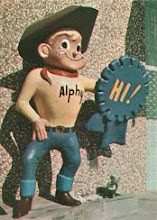
From a business standpoint, the early years of Jewel’s Turnstyle ownership were very difficult, with fairly substantial operating losses. In retrospect, it’s hard to say whether or not Jewel held off opening more Turnstyle stores in their key market, the Chicago area (where Turnstyle had barely scratched the surface) in order to refine the concept. It had to have taken longer than they planned.

In any event, their act was together by 1968 when a new Turn-Style (the name was hyphenated by this time) / Jewel Family Center opened in the North Point Shopping Center on Rand Road in Arlington Heights, Illinois, a bustling northwest suburban town. The following year, a new store opened in west suburban Glendale Heights. That year, 1969, marked a major turnaround for Turn-Style with all of the chain’s 13 stores operating at a profit.

In November 1971, two Turn-Style / Jewel Family Centers opened on the same day. One was in Schaumburg, Illinois, at the intersection of Golf and Meacham Roads, near the colossal new Woodfield Mall. This store is the one I remember shopping at the most. The other store was in the new “Jewel Village” Shopping Center in west suburban Westmont, Illinois, at the corner of Ogden and Cass Avenues. The Westmont store was located in a Jewel-owned shopping center that was unique in that it was used for a “proving ground” for some new Jewel retail concepts – “Case n’ Bottle” liquor stores, Village Fashions and a fabric/craft shop called “Stitch n’ Knit”. These didn’t end up flying as standalone concepts, although the liquor store idea was later folded into some Jewel stores.

In 1972, Jewel began to roll Turn-Style stores out to other areas, notably the Eisner territory, which was located in Central Illinois and Western Indiana, and had recently been extended to Indianapolis. They even opened some Family Centers in conjunction with non-Jewel supermarkets, pairing up two Omaha Turn-Styles, one with a Bakers supermarket, the other with a Hinky-Dinky.

The next year, Jewel tried its hand at the catalog showroom business. “Intrigued by (that) $2 billion business”, as they officially put it, the decision was made to open a catalog showroom area within five existing Chicago area Turn-Styles, which would be redubbed “Turn-Style Plus” stores. Deerfield, Niles, Arlington Heights, Schaumburg and Chicago (Grand and Kostner Avenues) were the “Plus” stores, each store setting aside an 8,000 selling floor and 15,000 of warehouse space to accommodate the venture. A 350-plus page Turn-Style Plus catalog was published for customers to use to make their buying decisions at home, call in an order (or write one up onsite) then flee to the store to pick it up. The catalog showroom concept was gaining popularity across the US at the time, with companies such as Service Merchandise and Best Products enjoying tremendous growth. The major catalog players in the Chicago area at the time were Bennett Brothers (still in business) and McDade and Company (now gone). The venture was not a success, and only a year later Jewel referred to it as an “experiment”.

The photos above are from the early 1970’s, that golden era of white wine, ferns, and brown mansard-roofed discount (and grocery) stores. The first shows the Jewel Village location in Westmont, Illinois, the second a Turn-Style / Eisner Family Center in Indianapolis, with a mile-long Olds Custom Cruiser in the foreground. The third photo is an unidentified Family Center and the last is of one of the five Turn-Style Plus stores.

And for more Turn-Stylin’, check out John Gallo’s new site, Stores Forever. John has been a longtime contributor to number of the old retail fansites, and has now started one of his own. John had the foresight to photograph many stores in his native Racine, Wisconsin/North Suburban Chicago areas in the 70’s and 80’s. His current post features a great shot of the Racine Turn-Style store as remodeled in the early 70’s, when the former Jewel had been converted to a “Big E” warehouse food store, a short-lived Jewel no-frills concept that fell under the Eisner wing. John has some great ShopKo stuff on there as well.

Sunday, June 29, 2008

Someone Was There at the Turn-Style...

…the girl with kaleidoscope eyes. Yes, it’s time to pay tribute to the only discount store chain to ever be mentioned* in a Beatles song. I’m referring of course to Turn-Style, a presence if never really the major discount player in the Chicago and Boston areas throughout the sixties and seventies.

Turnstyle Operating Corporation (in the early years the name “Turnstyle” was not hyphenated) was founded with their first store in Lynn, Massachusetts in 1957. By the end of 1961, the company had four self-service department stores in the greater Boston area, ranging in size from 45,000 feet to their largest store, a 70,000 square foot unit in Lawrence, Mass.

On February 28, 1962, Chicago’s Jewel Tea Co. completed a year-long acquisition of the Turnstyle organization through an exchange of stock. Having gotten their feet wet in the area of non-food sales with their merger with Osco Drug the previous year, Jewel was keen to expand to the larger general merchandise format that Turnstyle afforded. In combination with their supermarkets (and occasionally an Osco as well) the “Family Center” concept would offer customers the proverbial “one-stop shop” for many of their everyday needs. The Turnstyle acquisition served another purpose for Jewel as well as it became the company’s first expansion territory outside the Midwest, not counting its European investments. The familiarity with the Boston area that Jewel management gained would pave the way for their merger with Star Market the following year.

The Turnstyle stores, as the name implied, had an emphasis on apparel, but carried extensive lines of housewares, small appliances, sporting goods, hardware items and phonograph records among other items. They also featured a pharmacy and a “delightful snack bar in the middle of the store”.

Jewel wasted little time in opening the first Turnstyle units in their primary Midwest market, with the first store, a 110,000 square foot “Turnstyle Family Center” opening in Racine, Wisconsin in March 1962. Exactly a year later, two more virtually identical family centers were opened, one at 9449 Skokie Boulevard in Skokie, IL, and the other at 7342 Foster Avenue in Chicago’s Harlem-Foster Shopping Center.

The photo above features one of the above-mentioned early Turnstyle units. A broader view of the Skokie store can be seen on the Digital Past website (note the Eagle Food Center sign to the left of the photo. This was taken several years before their acquisition by California’s Lucky Stores chain). Below is a March 3, 1963 grand opening ad for the two stores which appeared in the Chicago Tribune.

*unintentionally